Gratis
Apoyo

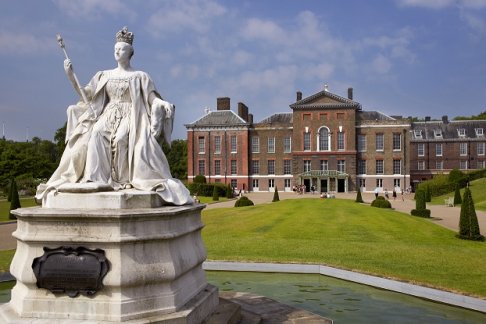
The Original London Sightseeing Tour A spectacular day out for all the family! THE TOURS The Original Tour (Yellow Route) Hop-on and off our tours at your leisure exploring London's sights in safety and comfort. Get the most out of your visit with a fun & informative English guided commentary provided by our professional tour hosts. The route takes in London's most famous sights; including Buckingham Palace, Big Ben & the Houses of Parliament, Downing Street, The London Dungeon, Tower Bridge and The Tower of London. Commentary - English Live Guided Bus Times - The Original Tour (Yellow Route) departs every 20 minutes from Whitcomb Street between 08:30 to 18:00. Tour Duration: 2 hours 15 mins Last full Yellow tour: 16:30 Mon-Thurs, Fri-Sun 17:00 Departure Points - We recommend you join this tour from our Visitor Centre or Piccadilly Circus. The City Sightseeing Tour (Red Route) Our City Sightseeing route takes in all of London's landmark attractions and offers entertaining, multi-lingual commentaries. Children can also enjoy our superb Kids' Channel on the Red Route. The route takes in the capital's most famous sights including Buckingham Palace, Big Ben & the Houses of Parliament, Downing Street, Madame Tussauds, The London Dungeon, Tower Bridge and The Tower of London. Commentary - Digitally Recorded Multi-Lingual in English, French, Spanish, Italian, Russian, German, Japanese, Portuguese & Kids' Channel. Bus Times: First red tour departs at 0830 from Grosvenor Gardens with departures every 10-15 minutes thereafter. Mon–Thurs last tour 16:50 and Fri-Sun last tour from 17:20 Tour Duration: 2 hours 15 mins Departure Points - We recommend you join this tour from Victoria, Visitor Centre or Piccadilly Circus. The Museum Tour (Blue Route) In addition to our two popular main tour routes, customers of The Original Tour can enjoy the delights of London's top museum districts relayed to them through the superb digital commentary. Enjoy the many attractions, shops and museums along the Blue route which runs from the British Museum down to Kensington and Knightsbridge for Kensington Palace, Harrods, the V&A, Natural History and Science Museums, whilst listening to an informative and entertaining commentary. Commentary - Digitally Recorded Multi-Lingual in English, French, Spanish, Italian, Russian, German, Japanese, Portuguese & Kids' Channel. Bus Times - First Blue Tour from Woburn Place 08:30, from Kensington Palace Gardens 08:15 daily, every 15-20 minutes thereafter daily. Last Full Blue Tour 17:15 from Kensington Palace Gardens to Woburn Place daily. Last Full Blue Tour 17:30 from Woburn Place to Kensington Palace Gardens daily. Tour Duration: 2 hours 15 mins Departure Points - We recommend you join this tour from Piccadilly Circus. EXPLORE LONDON WALKING TOURS Get up close to London's incredible history. Included FREE with every bus tour ticket! Three fabulous walks put you at the heart of the world's most exciting city: Changing the Guard Walk: See Buckingham Palace, St James's Palace and the regiments that guard them in this exciting walk as you march alongside the guards at Buckingham Palace.* Departs daily 10:30 from The Original London Visitor Centre Rock ‘n’ Roll Walk: Take a 90 minute walk through the heart of London’s rocking heritage: The Beatles, The Rolling Stones, David Bowie and The Sex Pistols – it’s only rock ‘n’ Roll, but I like it! Departs daily 13:00 from The Original London Visitor Centre Jack the Ripper Walk: Walk in the footsteps of the world's most infamous serial killer as we reveal his murderous tale from the dark street of Whitechapel in 1888. Departs daily 15:30 from The Original Tour stop at the Tower of London on Tower Hill * On non-guard change days walks go to Buckingham Palace and to St James's Palace where you can take photos of sentry boxes. The guard change does not take place if it is raining. ** All tours take approximately 90 minutes. Please note that the Jack the Ripper walk will finish at Aldgate East tube station and not at one of our bus stops. *** Walking tours are included FREE with an Original Tour ticket but can be purchased separately at 7 GBP each. MAIN DEPARTURE POINTS: The Original London Visitor Centre The newly opened London Visitor Centre is your one-stop-shop to the Capital and beyond. Visit us at our Trafalgar Square address for expert help from our excellent travel advisers. You can also purchase tickets for a range of exciting activities. Opening Hours: Monday-Saturday 08:30 to 18:00 Sunday & Bank Holidays 09:00 to 17:30 Address: 17-19 Cockspur Street, Trafalgar Square Nearest Tube: Charing Cross or Piccadilly Circus Start Point 1 - PICCADILLY CIRCUS Directions: Yellow Route From Whitcomb Street: The stop is by the McDonald's between Piccadilly Circus and Leicester Square. Red Route From Haymarket: The stop is outside the Theatre Royal. Green & Blue Routes From Rupert Street: The stop is outside 'Yo Sushi' restaurant on Rupert Street No.19. Timetable - Frequency approx. 10 mins Yellow Route: First Bus 08:30, Last Full Tour 18:00 Red Route: First Bus 09:15, Last Full Tour 16:20 Green Route: First Bus 09:52, Last Full Tour 14:10 Blue Route: First Bus 08:45, Last Full Tour 17:15 Start Point 2 - TRAFALGAR SQUARE Directions: Yellow & Red Routes From Trafalgar Square (North Side): The stop is located opposite The Original London Visitor Centre at Stop 'Z', by the Sainsbury Wing of the National Gallery. Green Route From Northumberland Avenue: The stop is opposite 'Garfunkel's' restaurant at Stop 'W'. Timetable - Frequency approx. 15 mins Yellow Route: First Bus 08:35, Last Full Tour 15:50 Red Route: First Bus 09:20, Last Full Tour 15:04 Green Route: First Bus 09:18, Last Full Tour 14:35 Start Point 3 - RUSSELL SQUARE & WOBURN PLACE Directions: Blue Routes From Woburn Place: The stop is located just off Russell Square on Woburn Place outside the Royal National Hotel. Timetable - Frequency approx. 15 mins Blue Route: First Bus 08:30, Last Full Tour 16:30 Start Point 4 - VICTORIA & GROSVENOR GARDENS Directions: Yellow Route From Buckingham Palace Road: The stop is located outside the Thistle Victoria Hotel on Buckingham Palace Road. Red Route From Grosvenor Gardens: The stop is located beside Grosvenor Gardens outside STA Travel. Timetable - Frequency approx. 10 mins Yellow Route: First Bus 09:05, Last Full Tour 16:15 Red Route: First Bus 08:30, Last Full Tour 17:20 Start Point 5 - MARBLE ARCH Directions: Yellow & Red Routes From Speakers' Corner: The stop is located at Speakers' Corner at Marble Arch on Park Lane. Take subway exit number '3', turn right at street level and go over pedestrian crossing. Our bus stop is the last on the right hand side
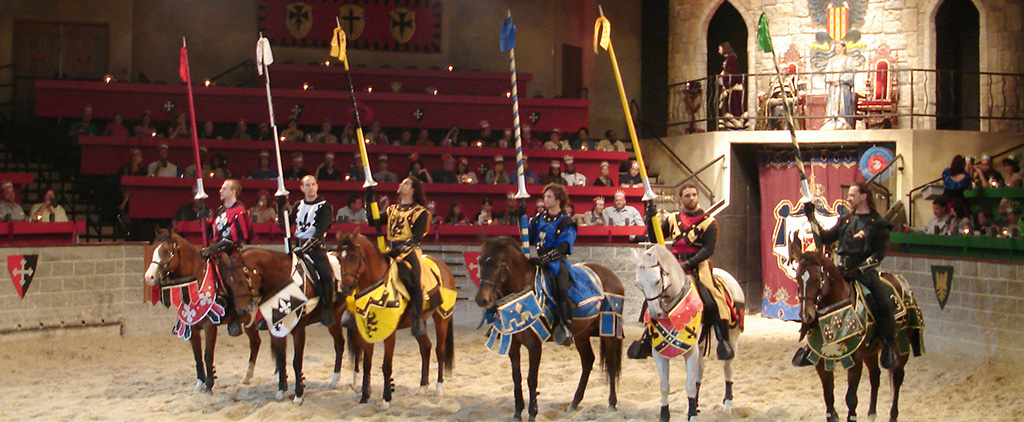
Medieval Times Orlando takes dinner shows for the family to a whole new level. From live jousting to sword fights to falconry and so much more
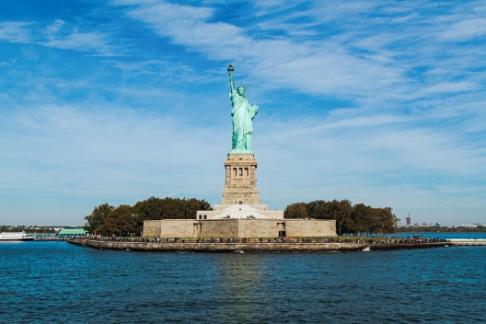
Como hogar a 2 de las atracciones TOP de Nueva York – la Estatua de la Libertad y el Museo y Memorial 9/11 – Bajo Manhattan es un lugar al que vienen todos los visitantes. Aproveche al máximo su tiempo en la Gran Manzana con este tour completo, con guías locales en pequeños grupos de 20 personas o más.
El tour empieza temprano, en Battery Park. Saldrá hacia la isla de la Libertad, con entrada exprés para el ferri, de tal manera que no deberá hacer colas y podrá conseguir los mejores asientos - y como que salimos tan temprano (normalmente en el primer ferri, dependiendo de la época del año), llegará a la estatua antes que las grandes multitudes. Una vez allí, podrá disfrutar de fabulosas vistas de la ciudad y de un recorrido guiado que le llevará al pedestal, permitiéndole acercarse a la gran dama más que en una visita normal.
A continuación, volverá al ferri y se dirigirá a la isla Ellis, donde podrá seguir los pasos de 12 millones de inmigrantes. Con su guía experto, caminará por las Escaleras de la Separación y se pondrá en el lugar de todas aquellas personas.
Explorará la colección y las exposiciones interactivas de museo, con la oportunidad de hacer preguntas a su guía.
Aquí es donde termina su primera parte del tour, aproximadamente 3 horas antes de la segunda parte en la ruta por el Bajo Manhattan, tendrá tiempo libre para explorar la isla si le apetece, antes de subir al ferri de regreso a Battery Park (incluido en el precio) y comer algo por su cuenta mientras va hacia el lugar de encuentro de la actividad de la tarde.
Más que solo visitar el memorial y el museo, queremos ofrecerle una imagen completa de todo lo que ocurrió en este día fatídico. Con un guía local, aprenderá cómo el suceso impactó a la comunidad (y al resto del mundo) y la dura recuperación de la ciudad.
El tour empieza en la capilla de San Pablo, aquí es donde se juntaron los amigos y familiares de las personas que presenciaron el ataque para darse soporte y rezar.
A continuación, visitará el Memorial Eleven Tears, un memorial conmovedor y personal que conmemora los 11 empleados de American Express que murieron el 9/11.
Después de esto, se dirigirán hacia la Planta Zero, para ver las impresionantes Piscinas del Memorial 9/11, cada una construida en la basa de las torres gemelas, e inscritas con los nombres de todas las personas que fallecieron en el ataque. Su guía le llevará también al Memorial de los Bomberos y se dará cuenta de gran coraje de aquellas personas y de los que trabajaron a contrarreloj para salvar las víctimas del ataque. El Árbol Superviviente es un lugar con el que quizás no se había fijado antes pero de gran interés.
La última parada del tour la realizará por su cuenta en el One World Observatory. Con entradas pre-reservadas no deberá hacer cola para acceder a la atracción.
Incluye:
Guía local experto
Entradas para el pedestal
Tour guiado por la Estatua de la Libertad y el Museo de la isla Ellis.
Todos los billetes de ferri necesarios entre Battery Park, la Estatua de la Libertad y la Isla Ellis.
Billete exprés para el ferri desde Battery Park (para ahorrarse las colas)
Entradas prereservadas para el One World Observatory
Pequeños grupos de 20 o menos personas
Exclusiones:
Corona de la Estatua de la Libertad
Propinas
Recogida en su hotel
Comida y bebida
Transporte entre los dos tours
Lugares que se visitan:
Museo de la Estatua de la Libertad y Pedestal
Museo de la Isla Ellis
Monumento Nacional del Castillo Clinton
Pier A Harbor House (desde el exterior)
Memorial de los Marineros Comerciantes Americanos
The Sphere
Memorial a los Veteranos de la Guerra de Corea
One World Observatory (Visita no guiada)
Capilla de San Pablo
Árbol Superviviente
Winter Garden
Memorial de los Bomberos
One World Trade Center
Brookfield Place (formalmente conocido como World Financial Center)
Memorial American Express Eleven Tears
Piscinas del Memorial 9/11
Por favor tenga en cuenta que a partir del 1 de marzo 2018 ya no se incluirá en la visita los siguientes lugares:
Brookfield Place (formalmente conocido como World Financial Center)
Memorial American Express Eleven Tears
Winter Garden
Tenga en cuenta que esta excursión solo está disponible en inglés
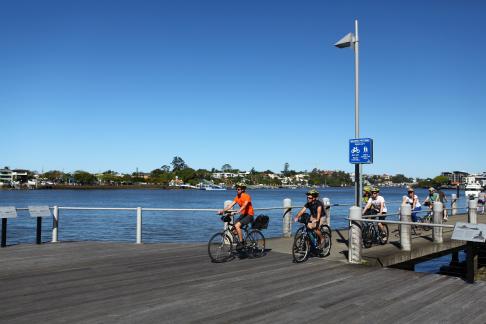
The ‘Eat Street Markets’ are set on an old disused container wharf. Come and enjoy everything from aromatic international cuisines and boutique beers, to the enchanting sights and sounds of live performers. Take a beautiful and leisurely ride around the twists and turns of the Brisbane River to experience Brisbane's best night food markets. The tour starts and finishes at Southbank Parklands. This is a unique opportunity and a delightful way to spend a Friday or Saturday evening in Brisbane. The entire route is on bike paths with no cars, and no hills! An ample amount of time (approx 1 - 1.5 hours) is available for you to explore the markets and try out the different food, drink and entertainment options. We return to Southbank Parklands via a comfortable boat cruise along the Brisbane river and witness the city come alive from a unique perspective. Your entry fee to the markets and river cruise is included in the ticket price. Any additional purchases are at your own expense. Please note that this tour requires a minimum of two people for the tour to go ahead.
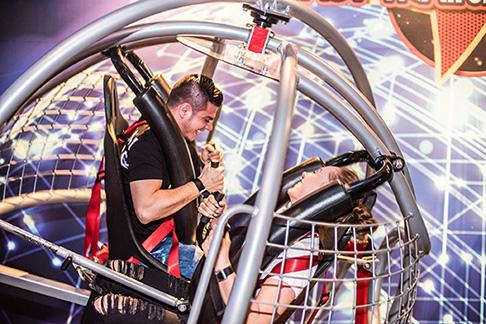
Wonderworks features over 100 interactive exhibits for visitors of all ages to experience. Some of the exhibits include the death defying bed-of-nails, wonder coasters, a bubble lab, and indoor glow-in-the-dark ropes course, astronaut training gyros and more! WonderWorks Orlando began as a Top Secret research laboratory on a remote island in the Bermuda Triangle. As legend has it, the world’s greatest scientists – led by Professor Wonder – were given the task of creating a man-made tornado and harnessing the POWER of it. During this experiment, something went awry and the power of the tornado was unleashed throughout the laboratory. This created a swirling vortex that was strong enough to rip the laboratory from its foundation. It was carried thousands of miles away and landed upside-down on the top of a brick warehouse in Orlando, Florida. Remarkably, all of the experiments remained intact and functional. When you enter the building, everything will be upside-down, so in order to participate in the fun, you must be inverted. Step inside the inversion tunnel and be turned right side up to begin your journey. Once you are properly aligned for your adventure, family fun awaits with more than 100 hands on exhibits.
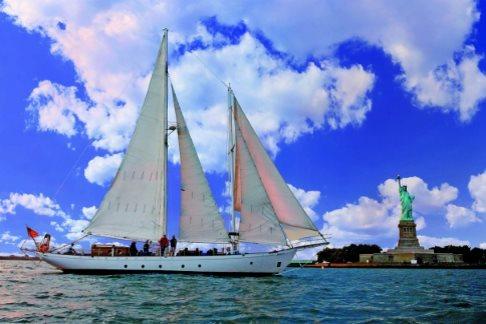
Shearwater is a classic Newport-style schooner yacht, only recently recognized as a national landmark in 2009. The vessel was built by Rice Brother Corporation in East Boothbay, Maine, back in a time when yachting was a rare combination of elegance and adventure; Rice Bros. were well known for building luxury pleasure yachts and produced some 4,000 hulls over a period of 64 years. The keel was laid down on January 4, 1929 and a news clip from the Boothbay Register reflects alongside a photograph "Tyler Hodgon at the old Tide Mill is getting out timbers for the schooner to be built at Rice’s. Vessel to be built of native white oak." Traditionally built from hand-hewn native white oak, she was the last boat to be constructed at that yard - likely due to the ensuing Great Depression brought on by the Stock Market Crash that occurred later that autumn. East Boothbay was a small coastal town with shipbuilding being its only industry. About 40 workmen were employed for the construction of SHEARWATER. Her designer Theodore Donald Wells was born in Hudson Falls, N Y on October 22, 1875. He was a naval architect and marine engineer, a member of the Society of Naval Architects and Marine Engineers and also the Institute of Naval Architects London. His education included post-graduate work at the University of Glasgow in Scotland. He began his career as a member of the firm Herreshoff and Wells, N. Y. City in 1902. Working with Herreshoff no doubt had an influence on his designs, which bear similarities to many of the famous Herreshoff designed yachts of that time. From 1903 to 1907 he worked for Wintringham and Wells and then began practicing his profession under his own name. Mr. Wells joined the Navy Department in March 1917 and became Superintending Constructor of the Baltimore District U. S. N. Notable yachts designed and constructed under his supervision are "Viking" a 272 foot steel motor yacht built for George F. Baker in 1929 by Newport News and "Karina" a three masted schooner built for Robert E. Tod in 1932 by Staten Island Shipbuilding. Mr. Tod was a well-known offshore yachtsman as was his former yacht ‘Thistle", which competed in the Emperors Cup ocean race. SHEARWATER was launched on May 4, 1929 and photographs in the Boothbay Register reflect her graceful and elegant lines. Her first Captain, Leon Esterbrook of Edgarton, MA, arrived to take charge of the fitting out. Her owner Charles E Dunlap was a member of the Seawanhaka Corinthian Yacht Club, Oyster Bay, NY and this became SHEARWATER’s first homeport after her completion in late September 1929. It was there in Oyster Bay that she first started to thrill those who sailed in luxury aboard her and those who were privileged to crew her on race day. Since her launching and documentation in Lloyd’s Register of American Yachts in 1929, she has had a colorful history and has been carefully maintained and restored to standards that few contemporary vessels are able to match and is truly a piece of American Maritime History. On November 7, 1942 SHEARWATER was requisitioned by the War Shipping Administration and became a member of The United States Coast Guard’s Coastal Picket Patrol during World War Two. She was painted gray and bore the numbers CG67004. Based at Little Creek, Virginia she patrolled the waters east of the Chesapeake Bay entrance and south towards Cape Hatteras. Her skipper during that period reflected on how they used their free time while out on submarine patrol to race against other yachts and in his own words "sailed in tandem with the schooner Lord Jim, racing in and out of port, up and down the east coast and winning." She was designed and built as a gaff rigged schooner but during this period was changed to a Marconi rig. She carries over 2,550 square feet while under full sail. A true veteran world cruiser, she first transited the Panama Canal in July 1946 and in the late 1970’s and early 1980’s completed a two and a half-year global circumnavigation. In December 1971 Mrs. John B. Thayer of Rosemont, wife of a former trustee and treasurer, donated SHEARWATER to the University of Pennsylvania’s Institute of Environmental Medicine. She was used by the university as a laboratory for research on physiological responses to the stresses of living and working underwater. Captained by James Shearson, she was fitted with compressors, generators, monitoring instruments and a small decompression chamber. She has participated in many Ancient Mariner and Classic yacht races in U S waters as well as racing in the Bay of Islands in New Zealand while on her circumnavigation in the early 1980’s. It is rumored she was once dismasted in the famous Newport to Bermuda race. She was last raced by the current owners in San Diego in May 1995 in the American Schooner Cup and finished second overall. She entered the yacht charter industry in 1966 whilst on the West Coast sailing to the Channel Islands and was again used to generate income to keep her shipshape while owned by the University of Pennsylvania. During the chartering industry’s infancy in the Caribbean, SHEARWATER was known as the " Queen of the Fleet". Today she continues this tradition offering the most unique sailing experience and has passed rigid Coast Guard inspections and can carry up to 49 passengers. We welcome you to join us for an excellent opportunity to experience the ambiance of a vintage sailing vessel while delighting in the splendors of The Manhattan sky-line, the Statue of Liberty or the beauty of the oceans beyond.