Gratis
Apoyo
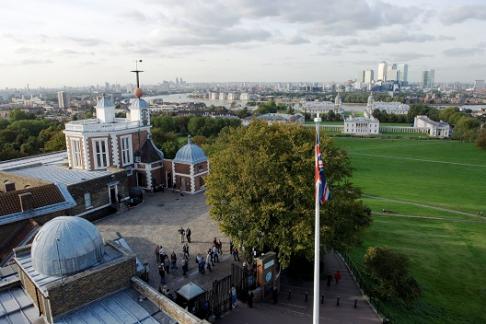
Get a taste of life on the ocean waves, including the chance to take the ship's wheel and learn how to steer 963 tons of Victorian tea clipper through storms and high seas Learn the story of one of the most famous and magnificent ships in the world Take in epic views of the London skyline. Initially built for the China tea trade and launched in 1869, Cutty Sark’s original wooden planks and iron frames have been meticulously conserved. As part of an ambitious six-year conservation project, the ship was raised over three metres, giving visitors the unique opportunity to stand directly underneath this world wonder and see her elegant lines and ground-breaking design. It has now been developed into an award-winning museum and visitor experience. Located in the UNESCO World Heritage Site of Maritime Greenwich, the National Maritime Museum and the Queen’s House are both located within a short walking distance from Cutty Sark and are free to visit. The Royal Observatory is another must-see attraction when visiting Greenwich; it’s the home of Greenwich Mean Time and the Prime Meridian.
Diana: Her Fashion Story ‘Diana: Her Fashion Story’ will trace the evolution of the Princess’s style, from the demure, romantic outfits of her first public appearances, to the glamour, elegance and confidence of her later life. From her earliest royal engagements, everything Diana wore was closely scrutinised, and the exhibition will explore how she navigated her unique position in the public eye: learning to use her image to engage and inspire people, and to champion the causes she cared about. Discover exquisite and celebrated outfits from throughout the Princess’s public life. The exhibition will bring together an extraordinary collection of garments, ranging from the glamorous evening gowns worn on engagements in the 1980s, to the chic Catherine Walker suits that made up Diana’s ‘working wardrobe’ in the 1990s. The Princess’s relationship with her favourite designers will be explored through a display of some of their original fashion sketches, created for her during the design process. Exhibition highlights will include the pale pink Emanuel blouse worn for Diana’s engagement portrait by Lord Snowdon in 1981, and Victor Edelstein’s iconic ink blue velvet gown, famously worn at the White House when the Princess danced with John Travolta. A blue tartan Emanuel suit, worn for an official visit to Venice in the 1980s, will go on display in public for the first time. The suit, a rare survival of the Princess’s daywear, was only recently rediscovered and acquired by Historic Royal Palaces – the charity responsible for Kensington Palace - at auction. * Please note, this exhibit is due to be very popular, queues are to be expected. The King's State Apartments Explore these sumptuous set of rooms, each grander than the last. Grand chambers of the State Apartments The King's Staircase is the first link to the circuit of rooms making up the King's State Apartments. All the great and good of Georgian London would have climbed up these stairs to visit the king. The Sunken Garden The beautiful Sunken Garden was planted in 1908, transforming part of the gardens previously occupied by potting sheds into a tranquil ornamental garden of classical proportions. Cradle Walk An arched arbour of red-twigged lime, the walk surrounds the sunken garden with arched viewpoints equally spaced along the sides. In the summer this shady tunnel provides the perfect place to view the bright colours in the Sunken Garden to the north or the re-landscaped gardens to the south. Formal gardens Kensington Gardens began life as a King's playground; for over 100 years, the gardens were part of Hyde Park and hosted Henry VIII's huge deer chase. When William and Mary established the palace in 1689, they began to create a separate park. Mary commissioned a palace garden of formal flower beds and box hedges. This style was Dutch and designed to make William, who came from Holland, feel at home. The Queen's State Apartments Explore these intimate, private rooms created for Queen Mary II, who ruled jointly with her husband, King William III, in the 17th century. The Queen’s rooms The Queen's Staircase, little changed since its construction in 1690, is deliberately plainer than the King's. Mary would have glided down its steps to reach her beloved gardens, created in the Dutch style, through the door at its foot.
This tour involves a fair amount of walking. Comfortable shoes are recommended. Free tickets for disabled visitors and for accompanying persons may not be booked online. The free tickets are issued at the "Special Permits" desk or "Reception", situated in the entrance hall to the Vatican Museums. Entrance into the Vatican is subject to a strict dress code. Shoulders and knees must be covered. No low-cut or sleeveless tops or shorts will be not permitted for men and women. Clients that do not adhere to the dress code will not be permitted to enter the Vatican. The local tour provider cannot be held responsible for entry denied due to improper dress. Large handbags, haversacks etc. are not permitted inside the museum. Wardrobe services are available inside the Vatican Museums Certain sites or sections of sites included in the tour may occasionally be subject to last minute changes, for example unscheduled closures. In such cases the tour operator shall be pleased to offer an alternative tour. How to redeem your voucher: You can redeem your voucher on board of the Open Bus or City Sightseeing Visitor Centre before 15:00
Buckingham Palace serves as both the office and London residence of Her Majesty The Queen, as well as the administrative headquarters of the Royal Household. It is one of the few working royal palaces remaining in the world today. Today the Buckingham Palace State Rooms are used extensively by Her Majesty The Queen and Members of the Royal Family to receive and entertain their guests on State, ceremonial and official occasions. When The Queen makes her annual visit to Scotland, the Palace's nineteen state rooms are open to visitors. What there is to see? The Buckingham Palace State Rooms form the heart of the working palace and are lavishly furnished with some of the greatest treasures from the Royal Collection - paintings by Rembrandt, Rubens, Poussin and Canaletto; sculpture by Canova; exquisite examples of Sèvres porcelain; and some of the finest English and French furniture. The Garden Described as a 'walled oasis in the middle of London', the Palace's garden is home to thirty different species of bird and more than 350 different wild flowers, some extremely rare. Visitors end their tour with a walk along the south side of the garden, with splendid views of the west front of the Palace and the famous lake. Multimedia Guide A multimedia guide is included in the ticket price and is available in English, French, German, Spanish, Italian, Brazilian Portuguese, Japanese, Russian and Mandarin. There is also a family multimedia guide (in English only) and accompanying activity trail, suitable for children 7-11 years. Changing of the Guard The Changing of the Guard ceremony takes place at 11:30 daily from April until the end of July and on alternate days for the rest of the year, weather permitting. The new guards arrive at the forecourt of the Palace at 11:30 from Wellington Barracks. The journey takes about 5 minutes and the soldiers are accompanied by a band. The ceremony is conducted on the Palace forecourt and takes approximately forty minutes to complete. [The Army have not yet released the schedule for July, August or September.] Wheelchair Access If you require wheelchair access or the use of the lift, you should not book with 365 Tickets.co.uk and should pre-book tickets directly with Buckingham Palace. Access booking line: 030 3123 7324 or email [email protected] Image Credits: Image 1: Photographer: Derry Moore, Royal Collection Trust / © Her Majesty Queen Elizabeth II 2013 Image 2 : Photographer: Peter Smith, Royal Collection Trust / © Her Majesty Queen Elizabeth II 2013 Image 3 : Photographer: Andrew Holt, Royal Collection Trust / © Her Majesty Queen Elizabeth II 2013 Image 4: Photographer: Derry Moore, Royal Collection Trust / © Her Majesty Queen Elizabeth II 2013
How Does The Barcelona Pass Work? The Barcelona Pass works through a scan and barcode system and will become activated after first use at an attraction. The pass, in 2 or 3 day options, works on calendar day basis after first activation, so it’s best practice to start using your pass first thing in the morning to make full use of each day. The passes are valid at each attraction and tour included only once. Adult passes are for anyone over the age of 12 and child passes are for 4 - 12 year olds. Note; each child pass holder must be accompanied by an adult pass holder at all times. Benefits of The Barcelona Pass SAVE TIME with everything included in one pass SAVE MONEY as all your attraction entry costs are included in the pass SAVE STRESS with our simple-to-use sightseeing pass and free guidebook NO HASSLE of carrying around loose change Forget queueing to buy tickets to top Barcelona attractions, The Barcelona Pass acts as your ticket into every one of the 20+ attractions, museums and tours included – allowing you to easily budget for your sightseeing when in Barcelona. All customers collecting Passes must provide the following documentation to the house security staff: - Photo Identification (Passport or Driving License). - Credit Card used to purchase the Pass(es). Under no circumstances will any Passes be issued without the above documentation.
Please note: On occasion, due to events, some stops might not be guaranteed, updated tour stop information can be found at the bus stops or on the online app Line A Piazza Castello Mole Antonellina Villa della Regina Monte dei Cappuccini Borgo Medievale Parco del Valentino Piazza Carlo Felice Duomo