A spectacular day out for all the family!
Routes and Times
With your Original Tour ticket, you have access to 5 bus tour routes around London. Four of these routes (Yellow, Blue and Orange) are sightseeing tour routes and buses run at a 15-20 minute frequency. The Green Route is The Loop Line around central London. The Orange and Purple Routes operate as a shuttle service and connect you with our sightseeing tours from the train stations and popular hotel districts of the capital. The information below is designed to help you plan your day out in London. Do also check our timetable for specific stop locations and route times.
All times are subject to change and if you have any questions on the day, please do ask our friendly and knowledgeable on-street staff who are on hand to help you plan your perfect day in London!
Yellow Route
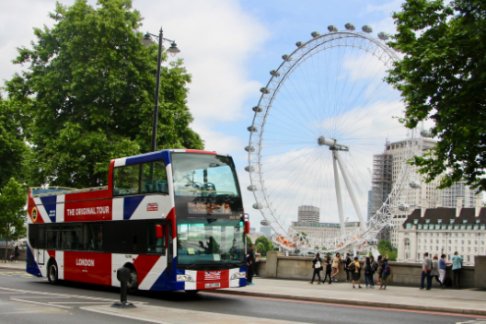
The Yellow Route presents the key sights and top attractions of London including the Tower of London, St Paul’s Cathedral, London Eye and Marble Arch. Crossing the river four times, you are guaranteed some spectacular views of London’s stunning scenery along the Thames.
The Yellow Route T2 offers multilingual commentary in 11 different languages (English, German, French, Spanish, Italian, Russian, Japanese, Portuguese, Mandarin, Arabic &Brazilian; Portuguese) and live guides on Yellow Route T1.
The main departure point for this tour route is located at Coventry Street, Piccadilly Circus but you can board the bus at any stop along the route.
Blue Route - The Royal Borough Route
The southern section of the Blue Route remains unchanged, covering the popular shopping district of Kensington with the world famous Harrods and Harvey Nicholls department stores as well as the museums in Kensington including Victoria & Albert Museum, Science Museum, Natural History Museum and the newly relocated Design Museum (opening 24 November 2016).
The Royal Borough of Kensington and Chelsea is the smallest borough in London but also one of the most densely populated. Nicknamed ‘Albertopolis’ after the husband of Queen Victoria, the area contains some of the most expensive residential properties in London along with a large number of museums (many with free entry) & cultural institutions.
We invite you to hop-off The Original Tour anywhere along the route or stay on-board to view the impressive architecture of this beautiful area.
Orange Route: The British Museum Tour
The British Museum is the most popular attraction in London with over 6 million visitors per year. Dedicated to human history, art & culture, the museum houses over 8 million exhibits (not all of them on show at one time!) from all over the world.
The new Orange Route also provides easy access from Kings Cross, St Pancras and Euston train stations. Clients arriving at these major train stations can now easily get into central London to switch onto the Yellow sightseeing tours which cover all the major sights and attractions of central London.
Green Route
The Green Route is a useful route to hop-on if you need to cross town quickly to get from one place to another.
The Green Route operates at a frequency of every 20 minutes (20-30 minutes in winter) with the first bus departing Charing Cross Road (Leicester Square) at 9.15am and the last bus at 2.35pm.
Purple Route - Capital Connector (T6)
The Purple Route is useful if you are staying in a hotel located in Bayswater, Notting Hill, Holland Park or Lancaster Gate or wish to go shopping at Westfield Shepherds Bush.
Operating in both eastbound and westbound directions, the Purple Route operates more frequently in an eastbound direction, enabling you to join our Yellow sightseeing route at Marble Arch.
Frequency: Every 20-30 minutes.
EXPLORE LONDON FREE WALKING TOURS
Get up close to London's incredible history. Included FREE with every bus tour ticket!
Three fabulous walks put you at the heart of the world's most exciting city:
Changing the Guard Walk: See Buckingham Palace, St James's Palace and the regiments that guard them in this exciting walk as you march alongside the guards at Buckingham Palace.*
Departs daily 10:00am from The Original London Visitor Centre
Rock ‘n’ Roll Walk: Take a 90 minute walk through the heart of London’s rocking heritage: The Beatles, The Rolling Stones, David Bowie and The Sex Pistols – it’s only rock ‘n’ Roll, but I like it!
Departs daily 13:00 from The Original London Visitor Centre
Jack the Ripper Walk: Walk in the footsteps of the world's most infamous serial killer as we reveal his murderous tale from the dark street of Whitechapel in 1888.
Departs daily 16:00 from The Original Tour bus stop 11 at the Tower of London on Tower Hill
* On non-guard change days (Tuesday, Thursday and Saturday) the walking tour will take you to see the Changing of the Horse Guard (at horse guards parade) and will then visit Buckingham Palace. The guard change does not take place if it is raining.
** All tours take approximately 90 minutes. Please note that the Jack the Ripper walk will finish at Aldgate East tube station and not at one of our bus stops.
*** Walking tours are included FREE with an Original Tour ticket but can be purchased separately at £9 GBP each.
MAIN DEPARTURE POINTS:
The Original London Visitor Centre
The newly opened London Visitor Centre is your one-stop-shop to the Capital and beyond. Visit us at our Trafalgar Square address for expert help from our excellent travel advisers. You can also purchase tickets for a range of exciting activities.
Opening Hours:
Monday-Saturday 08:30 to 18:00
Sunday & Bank Holidays 09:00 to 17:30
Address: 17-19 Cockspur Street, Trafalgar Square
Nearest Tube: Charing Cross or Piccadilly Circus
Start Point 1 - PICCADILLY CIRCUS
Directions:
Yellow Route From Coventry Street: The stop is by the McDonald's between KFC Circus and Leicester Square.
Green & Blue Routes From Rupert Street: The stop is outside 'Yo Sushi' restaurant on Rupert Street No.19.
Timetable - Frequency approx. 10 mins
Yellow Route: First Bus 08:30, Last Full Tour 18:00
Green Route: First Bus 09:52, Last Full Tour 14:10
Blue Route: First Bus 08:45, Last Full Tour 17:15
Start Point 2 - TRAFALGAR SQUARE
Directions:
Yellow Routes From Trafalgar Square (North Side): The stop is located opposite The Original London Visitor Centre at Stop 'Z', by the Sainsbury Wing of the National Gallery.
Green Route From Northumberland Avenue: The stop is opposite 'Garfunkel's' restaurant at Stop 'W'.
Timetable - Frequency approx. 15 mins
Yellow Route: First Bus 08:35, Last Full Tour 15:50
Green Route: First Bus 09:18, Last Full Tour 14:35
Start Point 3 - VICTORIA & GROSVENOR GARDENS
Directions:
Yellow Route From Buckingham Palace Road: The stop is located outside the Thistle Victoria Hotel on Buckingham Palace Road.
Timetable - Frequency approx. 10 mins
Yellow Route: First Bus 09:05, Last Full Tour 16:15
Start Point 4 - MARBLE ARCH
Directions:
Yellow Routes From Speakers' Corner: The stop is located at Speakers' Corner at Marble Arch on Park Lane. Take subway exit number '3', turn right at street level and go over pedestrian crossing. Our bus stop is the last on the right hand side