Gratis
Apoyo
Aspectos destacados
Crucero de 2 horas desde el corazón del Barrio Francés le hará vivir un viaje en el tiempo.
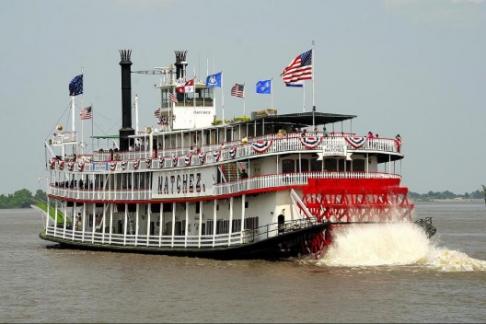
Experimentará Nueva Orleans de la mejor manera, desde el río. Disfrute de la belleza y el romanticismo del horizonte de Nueva Orleans a bordo del Evening Jazz Cruise en el auténtico Steamboat NATCHEZ.
Salidas desde el muelle de Toulouse Street detrás de la fábrica de cerveza Jax.
Impresionantes vistas de la ciudad mientras pasea por la cubierta.
Asientos en el interior y al aire libre
Los niños menores de 6 años viajan gratis, simpre acompañado por un adulto
El billete incluye
Crucero de 2 horas
Música swing en directo con "Dukes of Dixieland" nominado al Grammy
Museo de la Máquina de Vapor abierto a los visitantes
El billete NO incluye
Aparcamiento
Transporte hacia el crucero
Opciones de cócteles y vinos - están disponibles para comprar a bordo.
Save 27% Off Tickets with this fantastic combo offer. Use Big Bus London to hop off at both Sea Life London (Stop 7 on the Blue or Red Route) & Tower Bridge (Stop 11 on the Blue or Red Route)! Sea Life London Aquarium Inclusions Priority Entrance to SEA LIFE London Aquarium View Thousands of Marine Creatures in Themed Settings See one of the World’s Biggest Collection of Cownose Rays Walk Through the Glass Tunnel Tropical Walkway and the Nerve Testing Shark Walk Family Friendly Attraction with Interactive Features and Feeding Talks Visit the Monster of Claws - The Japanese Spider Crab Sea Dragon Kingdom Big Bus London Tour - Classic Ticket You can hop on and off the The Big Bus at many places of interest, to explore or visit attractions. Buses run at regular 10-20 minute intervals, so rejoining the tour is easy. Your ticket also includes a boat cruise on the River Thames, the option to join up to four guided walks and Big Bus Tours & exclusive Reward Vouchers, giving you excellent discounts at London attractions, shops and restaurants. Tour Highlights: • Buckingham Palace. • The Tower of London. • Big Ben. • Houses of Parliament. • London Eye. • Tower Bridge. • Westminster Abbey. • St. Paul's Cathedral. • Trafalgar Square. • British Museum. • Harrods. •...and more Languages: The Big Bus tour gives you a choice of either recorded commentary in eight languages on the Blue Route, or live English commentary provided by a professional Big Bus guide on the Red Route. The Blue Route offers recorded commentary in English, French, Spanish, German, Italian, Russian, Chinese and Portuguese. Departure Points and Times: You can start your tour at any tour stop. The most popular start points are Baker Street Station, Green Park Station, Marble Arch, Victoria Station and Trafalgar Square. Tours operate every day of the year except the 25th December. Tower Bridge Exhibition Over 100 years ago, the Victorians built a bridge that has become one of London's most famous landmarks. High level walkways were built to allow people to cross the Thames whilst the Bridge was lifted to let tall ships sail past - Tower Bridge Today these Walkways act as viewing galleries, giving visitors the most spectacular views across an ever changing London skyline. Walkways & Exhibition: Tower Bridge Unveils New GLASS FLOOR Across High-Level Walkways Launched in the West Walkway today, the glass floor offers visitors a never-seen-before view of London life, from 42 metres above the River Thames. Look down to spy road and pedestrian life whizzing over the Bridge while river vessels sail under it – and plan your visit in advance for the truly magical experience of the bascules being raised beneath your feet. The glass floor measures 11 metres long by 1.8 metres wide and comprises of six panels weighing 530 kilograms each. It is made up of five thick layers and can hold the equivalent weight of an elephant and two taxis! The installation took a 20-strong team to construct it over a six week period. The Walkways also offer stunning panoramic views of London while each of the 20 bridges featured in our popular and refreshed 'New Great Bridges of the World' display showcase a breath-taking feat of engineering. After learning about the history of the Bridge through animations and displays in the Towers, continue to the Victorian Engine Rooms for the beautifully maintained steam engines that were once used to power the bridge lifts. Visitors enter Tower Bridge Exhibition via the North Tower. They are then transported by lift to the top of the Tower (47 metres above the Thames) where they have a unique opportunity to see the Bridge’s steel skeleton from within. A short film explains the history and provenance of the Bridge and then there is the chance to admire the spectacular views – from both covered Walkways. On the east Walkway there are fantastic views of the Docklands and from the west Walkway you can see the new GLA building, the Tower of London, St Paul’s, the city, the Pool of London and Big Ben and the London Eye in the distance. Interactive computerised kiosks and graphic panels explain the significance of the views to visitors, as well as providing more information on the history and building of the Bridge. The interactive material and graphic panels are written in seven languages and an audio loop for the hard of hearing is also in place for the video show. There is another film to view in the South Tower before descending for the short walk to the historical Engine Rooms, included in your ticket price. Victorian Engine Rooms: These provide a fascinating insight into late 19th century engineering. Installed for the completion of Tower Bridge in 1894, these huge, and beautifully maintained, coal-driven engines were used to power the thousands of bascule Bridge lifts performed until 1976. Although lifts are now operated by electricity, the original steam engines are still in place. The Engine Rooms give visitors a chance to experiment with models demonstrating the technology behind the Bridge. There are also some amazing photographs of TowerBridgeTthroughout its lifetime – including a revealing picture of the heavy steel structure of the Bridge as the stone cladding was installed over it.
Meet Your Host - Steve Cummins: Steve is an author, stand up comedian, radio host and headliner in every major comedy club in Ireland. He is currently the resident host of The Laughter Lounge, Ireland’s largest and most prestigious comedy club. He has performed comedy on the BBC, RTE and Channel 4. He has also acted on TG4. He has written for three major television projects and created, wrote and presented the comedy panel show “What Were We Thinking?” for the national broadcaster 2FM and hosted his own show, On Demand with Steve Cummins on All 80s Radio.A natural performer and people person Steve brings a warmth and professionalism to this unique Dublin City Sightseeing tour, only from Hidden Dublin Tours.
Sample Itinerary 17.00 Boarding from King St or Circular Quay 17.30 Enjoy an on-board starter 18.00 Cruise around Middle Head and into Middle Harbour 18.15 Arrive Balmoral for Dinner at The Public Dining Room 20.00 Depart Balmoral and cruise past the Spit Bridge whilst indulging on your dessert and wines to match before returning to the main harbour where guests can sightsee or stop and have a swim 21.30 Return to pick up location
El crucero empieza a los pies de la Torre Eiffel y sigue por la orilla izquierda pasando por: Hotel des Invalides, Museo d’Orsay, Institut de France, Notre Dame de Paris y La Grand Bibliotheque. Vuelve por la orilla derecha pasando por Hotel de Ville, Museo del Louvre, Concorde, Grand Palais, Trocadero y finalment, vuelve a la Torre Eiffel. La embarcación está cubierta y ofrece vistas perfectas de París y las orillas del rio Sena. Menú disponible en: francés, inglés, español, alemán, japonés, italiano, ruso, coreano, chino y portugués. Menú Otoño / Invierno 2018/2019 (disponible hasta el 2 de abril de 2019) Menú Vegetariano (disponible del 4 de abril al 2 de octubre 2018)
HMS Belfast One of the most powerful large light cruisers ever built, HMS Belfast is now the only surviving vessel of her type to have seen active service during the Second World War. HMS Belfast played a leading part in the destruction of the battle cruiser Scharnhorst, and also the Normandy Landings. In service with the Royal Navy until 1965, she was saved for the nation in 1971 as a unique reminder of Britain’s naval heritage. Launch! Shipbuilding Through the Ages This new family-orientated exhibition will use hands-on and computerised interactive displays and engaging film and footage to demonstrate techniques of shipbuilding, from the ‘age of sail’ to modern prefabrication methods. The exhibition will focus on the science, engineering and social history of shipbuilding in Great Britain, and the interactive elements of the exhibition will allow children of all ages to get involved and experience this history. Explore ‘What shall we give in return for so much?’ One of the most powerful large light cruisers ever built, HMS Belfast is now the only surviving vessel of her type to have seen active service during the Second World War. Serving Britain for 32 years, she played an important role in both the Second World War and the Korean War as well as performing peacekeeping duties throughout the 1950s and 1960s. Saved from destruction in 1971, HMS Belfast is now part of the Imperial War Museum and is the first ship to be preserved for the nation since Nelson’s Victory. Through its team of staff and volunteers – many of whom are veteran crew – the Imperial War Museum is dedicated to making sure that HMS Belfast still has a role to play in reminding visitors of her unique place in Britain’s maritime heritage. History of HMS Belfast The term 'cruiser' goes back to the days of sailing ships when large frigates could be detached from the main fleet to cruise independently. The sailing cruiser, like her twentieth-century counterpart, was sufficiently powerful and fast to attack and destroy enemy commerce raiders. During the nineteenth century when sail gave way to steam and wooden ships were replaced by those built of iron, and later of steel, the cruiser evolved into a powerful warship which was used to patrol the Empire trade routes and protect friendly merchant shipping. After the First World War (1914-1918) a single category of cruiser emerged whose size was indicated by the size of its guns; thus, HMS Belfast is a 6-inch cruiser, designed for the protection of trade, for offensive action, and as a powerful support for amphibious operations. Please note: children under 16 must be accompanied by an adult. Please allow 1½ - 2 hours for your visit. Tower Bridge Exhibition Walkways & Exhibition: Visitors enter Tower Bridge Exhibition via the North Tower. They are then transported by lift to the top of the Tower (47 metres above the Thames) where they have a unique opportunity to see the Bridge’s steel skeleton from within. A short film explains the history and provenance of the Bridge and then there is the chance to admire the spectacular views – from both covered Walkways. On Monday 1st December, Tower Bridge’s East Walkway will reopen with its own GLASS FLOOR, joining the West Walkway to complete our new-look exhibition. Together with far-reaching views of East London, the walkway will be bolstered with a further 20 revered bridges in the extended popular display, ‘Great Bridges of the World’. On the east Walkway there are fantastic views of the Docklands and from the west Walkway you can see the new GLA building, the Tower of London, St Paul’s, the city, the Pool of London and Big Ben and the London Eye in the distance. Interactive computerised kiosks and graphic panels explain the significance of the views to visitors, as well as providing more information on the history and building of the Bridge. The interactive material and graphic panels are written in seven languages and an audio loop for the hard of hearing is also in place for the video show. There is another film to view in the South Tower before descending for the short walk to the historical Engine Rooms, included in your ticket price. Victorian Engine Rooms: These provide a fascinating insight into late 19th century engineering. Installed for the completion of Tower Bridge in 1894, these huge, and beautifully maintained, coal-driven engines were used to power the thousands of bascule Bridge lifts performed until 1976. Although lifts are now operated by electricity, the original steam engines are still in place. The Engine Rooms give visitors a chance to experiment with models demonstrating the technology behind the Bridge. There are also some amazing photographs of Tower BridgeTthroughout its lifetime – including a revealing picture of the heavy steel structure of the Bridge as the stone cladding was installed over it.