Gratis
Apoyo
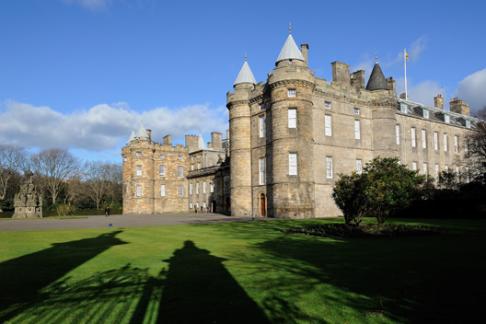
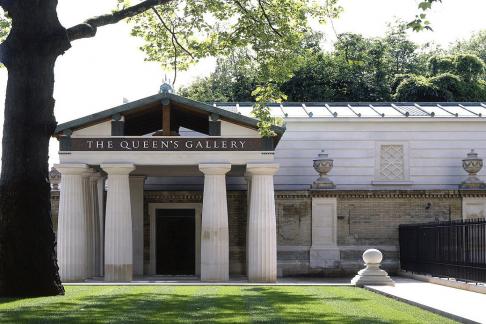
The Queen's Gallery was built in the shell of the former Holyrood Free Church and Duchess of Gordon’s School at the entrance to the Palace of Holyroodhouse. The buildings were constructed in the 1840s with funds from the Duchess of Gordon, but fell into disuse in the late 19th century. Benjamin Tindall Architects were appointed project architects for the new Queen’s Gallery in October 1999. Their central visual theme was a celebration of The Queen’s Golden Jubilee, expressed through a series of arches and screens that lead visitors from the Gallery entrance to the exhibition spaces beyond. Their design complements the original 19th-century architecture, elements of which were incorporated into the new spaces. Unsympathetic later internal alterations were removed, and a new exposed steel and concrete floor inserted to reflect the original ‘gallery’ of the Church. A new stone arched entrance was created at the centre of the Horse Wynd frontage, opposite the new Scottish Parliament building. The use of a stone archway, with a courtyard beyond, is a traditional entrance device in Scottish architecture. The main walling is of Catcastle stone, the dressed work and lettering is of Stainton stone and the base is of Kenmay granite. ‘THE QUEEN’S GALLERY’ lettering above the entrance is the work of John Neilson, a calligrapher and carver. The letters were cut from single pieces of stone. Above sits Scotland’s heraldic lion, designed by Jill Watson. The lion sedant is based on a small red lion that sits at the feet of Mary, Queen of Scots on her tomb in Westminster Abbey. (The Palace of Holyroodhouse was once home to Mary, Queen of Scots.) The monumental entrance doors of oak have gilded bronze hinges by Jill Watson. Continuing the heraldic theme, the main hinges are decorated with the Scottish lion and unicorn. The beasts are set against the adjacent urban scene of Edinburgh’s Royal Mile and the rural scene of Arthur’s Seat and Salisbury Crags. The upper hinges are made as golden boughs of flowering native trees – chestnut and laburnum, oak, rowan and hawthorn. The stone archway is decorated with a carved and gilded garland of Scottish flowers, including daisies and thistles, created by Graciela Ainsworth, an Edinburgh-based sculptor, carver and conservator. Over the old entrance to the former church is a stained-glass window by Christian Shaw. The design shows a perspective drawing of the interior of a gallery. At night, the shape of the archway is reflected by the glass lights by Keiko Mukaide set into the paving. The artist has given the tiles a water flow pattern, mirroring the stream of visitors walking in and out of the Gallery. Inside, the reception desk by Hamid van Koten is made from curved pieces of Scottish elm with kilned glass and patinated copper. The pendant lights were designed and made in Edinburgh by Ingrid Phillips. Dividing the reception from the main Gallery area is a patterned glass screen by Jacqueline Poncelet. The screen’s bronze handles by Jill Watson incorporate figures looking at art in a gallery. The dramatic central stair of native timber leads to the Gallery spaces above. The complex shape was designed by the architects with Charles Taylor Woodwork, who were responsible for the construction. Lights set into the first floor illuminate the curved balustrading. The Queen’s Gallery was opened by Her Majesty The Queen on 29 November 2002, as part of the Golden Jubilee celebrations. It hosts a programme of changing exhibitions from the Royal Collection.
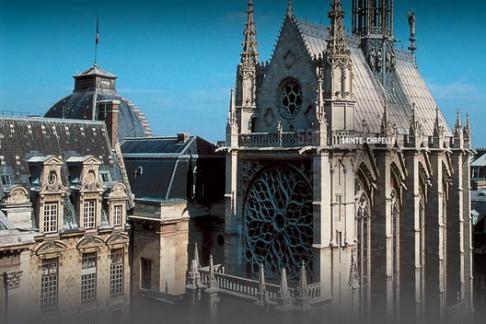
The Sainte-Chapelle Be dazzled by the 1,113 stained glass windows at this jewel of the Rayonnant Gothic period. The first of the Holy Chapels to be decorated with exceptional stained-glass windows. Known for having housed Christ’s Crown of Thorns, it has spectacular stained-glass windows. Veritable walls of light that make the Sainte-Chapelle the jewel of French Gothic. The Conciergerie Discover this Medieval royal palace that became a revolutionary tribunal and Marie-Antoinette’s prison. Discover on the Île de la Cité, the exceptional Gothic rooms of the first royal palace of Paris and the reproduction of the prison cells of the revolutionary tribunal. At the end of the 17th century, numerous people were imprisoned in the prison of the Conciergerie, including Marie-Antoinette. The Conciergerie is also listed as a historical building by the Unesco. Pantheon On Montagne Sainte-Geneviève in Paris, visit the Panthéon, masterpiece of the architect Soufflot. Come and learn all about the Pantheon, this incredible building by Soufflot who's ambition was to outdo the churches of St. Peter's in Rome and St. Paul’s in London. Observe the style of this building, inspired by the Pantheon commissioned by Agrippa in Rome. From 1874 onwards, the sanctuary was decorated with paintings on canvas illustrating the life of Saint Geneviève and the epic story of the beginnings of both Christianity and the monarchy in France. Make the most of the Pantheon with a visit into the Crypt, get to see the tombs of the eminent personalities who shaped France's national identity. A permanent exhibition gives details about the lives and works of those who are buried here, from Voltaire and Rousseau to Alexandre Dumas. You'll also have the chance to see the Foucault’s pendulum*, first installed in 1851 and removed then reinstalled in 1995, this device demonstrated the Earth's rotation.
One Pulse Memorial Located on the site of the Pulse nightclub, the Pulse Interim Memorial is a contemplative structure that serenely surrounds and pays homage to the original building as it still stands and to the outpouring of love from the world that followed the tragedy that occurred there. The downtown Orlando site has become a gathering place for visitors who wish to pay respect to the victims and survivors of the largest hate crime against a targeted group in the United States and reflect on the unity that was shown on a global scale in response. The temporary Interim Memorial structure will eventually be replaced with a permanent memorial. Winter Park Farmers Market The Winter Park Farmers' Market is held at the old train depot, a location that has been rested into a historical landmark. Lake Eola Farmers Market The Orlando Farmers' Market is much more than just your traditional market. Bringing in the best in fresh produce, baked goods, crafts, gifts, jewelry, plants, and more. Food, shopping, and fun for all ages make it the perfect family afternoon with live music and entertainment.
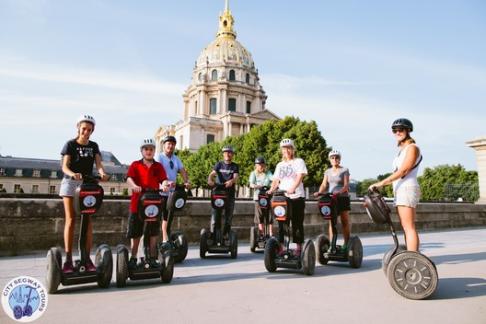
This is the text for the Frequently Asked Questions that applies to this specific to QUESTION: IS THERE AN AGE OR WEIGHT LIMIT? For your riding safety, guests must be at least 12 years of age and weigh at least 100 pounds and not in excess of 260 pounds. All participants must be at least 12 years of age. QUESTION: HOW BIG WILL MY GROUP BE? Our tours operate in groups of 8 guests or less. QUESTION: WHAT TIME DO I NEED TO GET THERE FOR MY TOUR? We ask that the client arrive 10-15 minutes early for the scheduled tour to fill out necessary paperwork. Each member of your party will be required to complete and sign a liability waiver form. QUESTION: WILL I NEED TO PUT DOWN A DEPOSIT? Yes. Insurance requires that City Segway Tours pre-authorize 400€ on a credit card. Please bring your MasterCard, Visa, Amex, or cash with you for this deposit (not Discovery). Your card will not be charged, but we will hold onto the details should your Segway incur any damage while in your possession. QUESTION: IF THIS IS MY FIRST TIME TO RIDE A SEGWAY, WILL I BE ABLE TO PICK IT UP QUICKLY? Your safety is always our highest priority. Therefore, we begin each tour with a very thorough orientation of the Segway and its use before going out to enjoy the city! QUESTION: CAN MINORS COME ON TOUR ALONE? For safety reasons, minors (anyone under the age of 18) must be accompanied by an adult on the tour. QUESTION: IF I AM PREGNANT CAN I JOIN THE TOUR? Unfortunately, due to the risk to both child and mother, pregnant women are not allowed to participate on our Segway tours. QUESTION: ARE THE TOURS CANCELLED IF IT RAINS? Our tours go rain or shine, and we have rain ponchos available in our office for €1 which are fully reimbursed if not used.
The Queen’s Gallery at Buckingham Palace is a permanent space dedicated to changing exhibitions* of items from the Royal Collection, the wide-ranging collection of art and treasures held in trust by The Queen for the Nation. Ticket Includes: Entry tickets to The Queen’s Gallery, London Complimentary multimedia tour Entry to current special exhibition* (see below for details) *Special Exhibition Dates: 9 Nov 2018 - 28 April 2019: Russia, Royalty & the Romanovs and 'Roger Fenton’s Photographs of the Crimean War, 1855' 24 May - 13 Oct 2019: Leonardo da Vinci: A Life in Drawing. To commemorate the 500th anniversary of the death da Vinci, this exhibition will include 200 of his drawings. 15 Nov 2019 - 4 May 2020: George IV: Art & Spectacle Please Note: The Queen's Gallery will be closed between these special exhibitions
Diana: Her Fashion Story ‘Diana: Her Fashion Story’ will trace the evolution of the Princess’s style, from the demure, romantic outfits of her first public appearances, to the glamour, elegance and confidence of her later life. From her earliest royal engagements, everything Diana wore was closely scrutinised, and the exhibition will explore how she navigated her unique position in the public eye: learning to use her image to engage and inspire people, and to champion the causes she cared about. Discover exquisite and celebrated outfits from throughout the Princess’s public life. The exhibition will bring together an extraordinary collection of garments, ranging from the glamorous evening gowns worn on engagements in the 1980s, to the chic Catherine Walker suits that made up Diana’s ‘working wardrobe’ in the 1990s. The Princess’s relationship with her favourite designers will be explored through a display of some of their original fashion sketches, created for her during the design process. Exhibition highlights will include the pale pink Emanuel blouse worn for Diana’s engagement portrait by Lord Snowdon in 1981, and Victor Edelstein’s iconic ink blue velvet gown, famously worn at the White House when the Princess danced with John Travolta. A blue tartan Emanuel suit, worn for an official visit to Venice in the 1980s, will go on display in public for the first time. The suit, a rare survival of the Princess’s daywear, was only recently rediscovered and acquired by Historic Royal Palaces – the charity responsible for Kensington Palace - at auction. * Please note, this exhibit is due to be very popular, queues are to be expected. The King's State Apartments Explore these sumptuous set of rooms, each grander than the last. Grand chambers of the State Apartments The King's Staircase is the first link to the circuit of rooms making up the King's State Apartments. All the great and good of Georgian London would have climbed up these stairs to visit the king. The Sunken Garden The beautiful Sunken Garden was planted in 1908, transforming part of the gardens previously occupied by potting sheds into a tranquil ornamental garden of classical proportions. Cradle Walk An arched arbour of red-twigged lime, the walk surrounds the sunken garden with arched viewpoints equally spaced along the sides. In the summer this shady tunnel provides the perfect place to view the bright colours in the Sunken Garden to the north or the re-landscaped gardens to the south. Formal gardens Kensington Gardens began life as a King's playground; for over 100 years, the gardens were part of Hyde Park and hosted Henry VIII's huge deer chase. When William and Mary established the palace in 1689, they began to create a separate park. Mary commissioned a palace garden of formal flower beds and box hedges. This style was Dutch and designed to make William, who came from Holland, feel at home. The Queen's State Apartments Explore these intimate, private rooms created for Queen Mary II, who ruled jointly with her husband, King William III, in the 17th century. The Queen’s rooms The Queen's Staircase, little changed since its construction in 1690, is deliberately plainer than the King's. Mary would have glided down its steps to reach her beloved gardens, created in the Dutch style, through the door at its foot.