Gratis
Apoyo
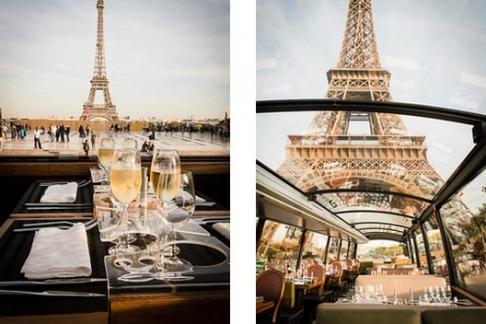
Please note: Guests should dress elegantly If you want to take your time at the Eiffel Tower after dinner, you can reach the 2nd floor with no extra fee taking only the stairs. You can do the cruise later on youe own (Port de la Bourbonnais, Bateaux Parisians company, in front of the Eiffel Tower. Departure every hour until 9:30pm). It is recommended to inform the hostess about it. The skip-the-line access is subjet to the Eiffel Towr procedures: The Vigipirate plan, the security control or an unforeseen crowd can slow down the entrance. Enjoy a delicious dinner in this chic, contemporary Eiffel Tower restaurant in Paris. Menu*: Trout marinated in Manakara peppercorns, fromage blanc with herbs and a citrus fruit reduction ** Roasted poultry supreme, mashed potatoes with jerusalem artichoke and a truffle oil emulsion ** Crousti Eiffel with praline chocolate, custard cream sauce ** Château de Lagorce - AOC Bordeaux (Rouge) Château Tariquet - IGP Côtes de Gascogne (Blanc) Les Celliers de Ramatuelle - AOP Côtes de Provence (Rosé) Mineral water & coffee Child menu (-12 years old)* King prawns in mild spices, celeriac remoulade and grapefruit with pomegranate seed vinaigrette ** Sautéed cod steak and herb mashed potatoes or Roasted poultry supreme and herb mashed potatoes ** Tour Eiffel with chocolate and a praline custard sauce ** Soft
The Sainte-Chapelle Be dazzled by the 1,113 stained glass windows at this jewel of the Rayonnant Gothic period. The first of the Holy Chapels to be decorated with exceptional stained-glass windows. Known for having housed Christ’s Crown of Thorns, it has spectacular stained-glass windows. Veritable walls of light that make the Sainte-Chapelle the jewel of French Gothic. The Conciergerie Discover this Medieval royal palace that became a revolutionary tribunal and Marie-Antoinette’s prison. Discover on the Île de la Cité, the exceptional Gothic rooms of the first royal palace of Paris and the reproduction of the prison cells of the revolutionary tribunal. At the end of the 17th century, numerous people were imprisoned in the prison of the Conciergerie, including Marie-Antoinette. The Conciergerie is also listed as a historical building by the Unesco. Pantheon On Montagne Sainte-Geneviève in Paris, visit the Panthéon, masterpiece of the architect Soufflot. Come and learn all about the Pantheon, this incredible building by Soufflot who's ambition was to outdo the churches of St. Peter's in Rome and St. Paul’s in London. Observe the style of this building, inspired by the Pantheon commissioned by Agrippa in Rome. From 1874 onwards, the sanctuary was decorated with paintings on canvas illustrating the life of Saint Geneviève and the epic story of the beginnings of both Christianity and the monarchy in France. Make the most of the Pantheon with a visit into the Crypt, get to see the tombs of the eminent personalities who shaped France's national identity. A permanent exhibition gives details about the lives and works of those who are buried here, from Voltaire and Rousseau to Alexandre Dumas. You'll also have the chance to see the Foucault’s pendulum*, first installed in 1851 and removed then reinstalled in 1995, this device demonstrated the Earth's rotation.
Historic setting: The Household Cavalry Museum sits within Horse Guards in Whitehall, central London, one of the city’s most historic buildings. Dating from 1750, it is still the headquarters of the Household Division, in which the Household Cavalry has performed the Queen’s Life Guard in a daily ceremony that has remained broadly unchanged for over 350 years. The Household Cavalry: The Household Cavalry was formed in 1661 under the direct order of King Charles II and now consists of the two senior regiments of the British Army – The Life Guards and the Blues and Royals. We have two roles: as a mounted regiment (on horseback), we guard Her Majesty The Queen on ceremonial occasions in London and across the UK and are a key part of the Royal pageantry; as an operational regiment we serve around the world in armoured fighting vehicles. We currently have units deployed on active service in Iraq and Afghanistan. Our fighting capacity is matched by our strategic role in international peace keeping and humanitarian operations. Collections: Over the centuries we have amassed an outstanding collection of rare and unique treasures from ceremonial uniforms, royal standards and gallantry awards to musical instruments, horse furniture and silverware by Fabergé. Each exhibit has its own compelling story to tell and many are on display for the very first time. You can see two silver kettledrums given to the regiment in 1831 by William IV; the pistol ball that wounded Sir Robert Hill at Waterloo and the cork leg which belonged to the first Marquess of Anglesy, who, as the Earl of Uxbridge, lost his real one at Waterloo. Modern additions to the collection include Jacky Charlton’s football cap – he did his national service with the regiment and Sefton’s bridle – the horse that was injured in the 1982 Hyde Park bombings. Much of the collection has resulted from the close association that has existed between the Household Cavalry and Royalty. We have, after all, protected successive kings and queens from rebels, rioters and assassins for nearly 350 years. Working Stable Block: Visitors can gain a unique behind-the-scenes look at our working stable block. All the horses here are on duty and at different times of the day you will see something going on - you might see the horses being brought in, groomed, fed and watered, their hooves oiled and shoes checked, their saddles adjusted ready to go on guard or just see the stables themselves being cleaned. Both our horses and riders go through a rigorous and demanding training. In the Museum's many interactive and multimedia presentations, you will hear first hand accounts of what this training is like and the techniques our soldiers use to master their horses and complete the gruelling preparations for regimental inspections.
Then you can try one of the latest water sports of paddle boarding, either stand up, or, if you prefer, you can kneel on the board as you look down into the waters at the many fish swimming beneath you. The adventure continues with kayaking and exploring the coves with your helpful guide who will help you get the most from the tour. You will get to enjoy a light snack and drinks before heading back to your hotel and all you need to bring is: swimwear, a change of clothes, sunsreen, a camera and a very big, sense of adventure!
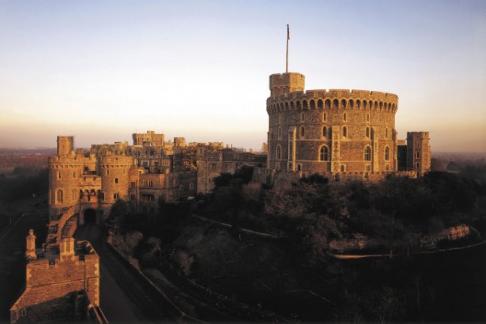
Buckingham Palace serves as both the office and London residence of Her Majesty The Queen, as well as the administrative headquarters of the Royal Household. It is one of the few working royal palaces remaining in the world today. Today the Buckingham Palace State Rooms are used extensively by Her Majesty The Queen and Members of the Royal Family to receive and entertain their guests on State, ceremonial and official occasions. During August and September when The Queen makes her annual visit to Scotland, the Palace's nineteen state rooms are open to visitors. What there is to see? The Buckingham Palace State Rooms form the heart of the working palace and are lavishly furnished with some of the greatest treasures from the Royal Collection - paintings by Rembrandt, Rubens, Poussin and Canaletto; sculpture by Canova; exquisite examples of Sèvres porcelain; and some of the finest English and French furniture. In celebration of The Queen's 90th birthday, a special exhibition will be staged across each of Her Majesty's official residences during 2016. Fashioning a Reign: 90 Years of Style from The Queen's Wardrobe (23 July – 2 October 2016) The Garden Described as a 'walled oasis in the middle of London', the Palace's garden is home to thirty different species of bird and more than 350 different wild flowers, some extremely rare. Visitors end their tour with a walk along the south side of the garden, with splendid views of the west front of the Palace and the famous lake. Audio Guide An audio guide is included in the ticket price and is available in English, French, German, Spanish, Italian, and Japanese, Russian and Mandarin. There is also a family audio guide (in English only) and accompanying activity trail, suitable for children 7-11 years. Changing of the Guard The Changing of the Guard ceremony takes place at 11:30 daily from April until the end of July and on alternate days for the rest of the year, weather permitting. The new guards arrive at the forecourt of the Palace at 11:30 from Wellington Barracks. The journey takes about 5 minutes and the soldiers are accompanied by a band. The ceremony is conducted on the Palace forecourt and takes approximately forty minutes to complete. [The Army have not yet released the schedule for July, August or September.] Wheelchair Access If you require wheelchair access or the use of the lift, you should not book with 365 Tickets.com and should pre-book tickets directly with Buckingham Palace. Access booking line: 020 7766 7324 www.royalcollection.org.uk or email [email protected] Windsor Castle, the largest and oldest occupied castle in the world, is one of the official residences of Her Majesty The Queen. The Castle's dramatic site encapsulates 900 years of British history. It covers an area of 26 acres and contains, as well as a royal palace, a magnificent chapel and the homes and workplaces of a large number of people. Kew Gardens Kew Gardens, is a World Heritage Site located in 121 hectares of stunning vistas with six magnificent glasshouses set in a beautiful landscape beside the River Thames between Richmond and KEW in south-west London. Kew Gardens represents more than 250 years of historical gardens. It is home to a remarkable collection of over 30,000 types of plants from all over the world that range from the decorative to the peculiar. Kew Gardens provide opportunities for public enjoyment and enrichment and the behind-the-scenes scientific work helps ensure a sustainable future for plants and people. In the summer of 2004, Kew's determination to make serious botany great fun for children was demonstrated with the opening of 'Climbers and Creepers'. Bringing a new use to an old cycad house by White Peaks, Climbers and Creepers engages children from around 3-9 years in the pleasures of learning more about plants and their relationships with animals and people. Apart from the sheer beauty and tranquillity of the garden's landscapes Kew offers a wonderful day out for all, whether horticulturally, historically or botanically inclined. Botanical Highlights The dates below are approximate, and flowering can vary by three to four weeks, depending on the weather. Image Credits: Image 1: Photographer: Derry Moore, Royal Collection Trust / © Her Majesty Queen Elizabeth II 2013 Image 2 : Photographer: Peter Smith, Royal Collection Trust / © Her Majesty Queen Elizabeth II 2013 Image 3 : Photographer: Andrew Holt, Royal Collection Trust / © Her Majesty Queen Elizabeth II 2013 Image 4: Photographer: Derry Moore, Royal Collection Trust / © Her Majesty Queen Elizabeth II 2013