Gratis
Apoyo
Join us on our exclusive Premium Cliffs of Moher day tour to some of Ireland’s most visited sites. Includes access to Doolin Cave (only by Hidden Dublin Tours), a boat trip beneath the cliffs, the Burren, and Galway City! Make a quick photo stop at St.Brigid’s Well - said to visited by a fish (a symbol of Christianity that predates the cross). Passing down a cleft in the rock is a little like passing through time to a more ancient faith, to a purity of prayerful expression. This vale of solace is a far cry from the exposure of the cliffs we are making our way towards! We reach Doolin harbour at approx 11.30am where you can soak up the atmosphere and grab yourself a coffee before boarding our vessel for the 12pm boat trip. The boat trip will take approx 1 hour. This stunning cruise is an unmissable part of your trip to Ireland and position you with the best views of the Cliffs of Moher from sea level. They are made up of various types of perpendicular or overhanging rocks including sandstone, siltstone and shale. These cliffs have been broken into the most fantastic forms, and eroded into hundreds of caves by the relentless pounding of the Atlantic waves. Lunch stop at McGann's pub where you can Enjoy some home-made soups, light meals, cakes and desserts, as well as a wide selection of hot and cold drinks if you desire in the picturesque village of Doolin We make our way to Doolin Cave for the 2pm Tour. You'll never see anything else like it.... Oh, and did we mention, your Driver and his father built the very tunnel you went down in today - did you spot his picture on the wall? After the Cave, we make our way to The Burren - a region of County Clare in the southwest of Ireland. It’s a karst landscape of bedrock incorporating a vast cracked pavement of glacial-era limestone, with cliffs and caves, fossils, rock formations and archaeological sites. After the Burren, we make our way to Galway City. The city’s hub is 18th-century Eyre Square, a popular meeting spot surrounded by shops, traditional pubs, stone-clad cafes, boutiques and art galleries within winding lanes and medieval city walls. We then make our way back to Dublin. You have achieved A LOT today! *** route schedule may change depending on weather, traffic or other unforseen circumstances
Highlights
See & feel The Netherlands with this unique flight experience
Experience a spectacular perspective from the air with breathtaking movie images
Get new insights into how The Netherlands came into being
Feel you’re flying right past the must-sees of The Netherlands with surprising special effects while hanging in a huge spherical screen
Ticket includes:
Entry to This is Holland
Various exhibitions:
The Netherlands in the Past: an inspiring movie about the Netherlands, the battle against the water, and how they use water
The Netherlands Today: experience The Netherlands as it is today. Be introduced to the unique places you will see during the Flight Experience.
The Flight Experience: hang inside a huge spherical screen with your hands and feet dangling free. Feel the wind, mist and scents, it seems as if you are truly flying through the air, crossing dikes and braving storms
Additional information about the sights after the experience
Dutch Heritage Sites: find out more about the Netherlands in terms of water management, civil society, and (land) design through ten Dutch World Heritage Sites
Ticket Excludes:
Food & Drinks
Please note: Persons shorter than 102 cm and pregnant women are not allowed into the Flight Experience.
Shakespeare's Globe Exhibition is the world's largest exhibition devoted to Shakespeare and the London in which he lived and worked. Housed beneath the reconstructed Globe Theatre on London's Bankside, the exhibition explores the remarkable story of the Globe, and brings Shakespeare's world to life using a range of interactive displays and live demonstrations. Visitors to the exhibition can discover how shows were produced in the theatres of Shakespeare's time, from writing and rehearsals to music, dance and performance. There are opportunities to learn about the traditional crafts and techniques used during the process of rebuilding the Globe; to find out how special effects were produced in Shakespeare's time, to listen to recordings from some of the most memorable Shakespearean performances ever, or join the cast and add your own voice to a scene recorded by Globe actors; to create your own Shakespearean phrases in the word jungle; to watch a sword-fighting display and browse the costume collection, where you can learn about the extraordinary methods used in creating clothes 400 years ago. A visit to the Exhibition includes a guided tour of the theatre where expert guide-storytellers provide fascinating half hour tours of the auditorium, taking visitors on a journey through time back to Elizabethan London as well as the reconstruction process of the 1980's-90's and how the wooden 'o' works today as an imaginative and experimental theatrical space. An exhibition visit and theatre tour lasts about one and a half hours. Information sheets are available in English, large print, German, French, Dutch, Spanish, Portuguese, Italian, Russian, Polish, Romanian, Chinese and Japanese. NB: There is no access to the theatre during matinee performances. Visitors will be taken to the nearby archaeological site of the Rose Theatre, Bankside's first playhouse. Tower Bridge Exhibition Over 100 years ago, the Victorians built a bridge that has become one of London's most famous landmarks. High level walkways were built to allow people to cross the Thames whilst the Bridge was lifted to let tall ships sail past - Tower Bridge Today these Walkways act as viewing galleries, giving visitors the most spectacular views across an ever changing London skyline. Walkways & Exhibition: Visitors enter Tower Bridge Exhibition via the North Tower. They are then transported by lift to the top of the Tower (47 metres above the Thames) where they have a unique opportunity to see the Bridge’s steel skeleton from within. A short film explains the history and provenance of the Bridge and then there is the chance to admire the spectacular views – from both covered Walkways. Together with far-reaching views of East London, the walkway will be bolstered with a further 20 revered bridges in the extended popular display, ‘Great Bridges of the World’. On the east Walkway there are fantastic views of the Docklands and from the west Walkway you can see the new GLA building, the Tower of London, St Paul’s, the city, the Pool of London and Big Ben and the London Eye in the distance. Interactive computerised kiosks and graphic panels explain the significance of the views to visitors, as well as providing more information on the history and building of the Bridge. The interactive material and graphic panels are written in seven languages and an audio loop for the hard of hearing is also in place for the video show. There is another film to view in the South Tower before descending for the short walk to the historical Engine Rooms, included in your ticket price. Victorian Engine Rooms: These provide a fascinating insight into late 19th century engineering. Installed for the completion of Tower Bridge in 1894, these huge, and beautifully maintained, coal-driven engines were used to power the thousands of bascule Bridge lifts performed until 1976. Although lifts are now operated by electricity, the original steam engines are still in place. The Engine Rooms give visitors a chance to experiment with models demonstrating the technology behind the Bridge. There are also some amazing photographs of Tower BridgeTthroughout its lifetime – including a revealing picture of the heavy steel structure of the Bridge as the stone cladding was installed over it.
Our tour begins with a coach drive direct to the dark side of London. The Theatre Drury Lane, said to be the most haunted theatre in London, your guide will tell you why! We see The Old Bailey - the site of numerous public hangings, drive along Fleet Street, home of Sweeny Todd - the demon barber of Fleet Street - and his accomplice, Mrs Lovatt, who was said to have baked pies from the flesh of his victims, selling them to unsuspecting customers. As the shadows lengthen, we approach London's East End, a hotbed of crime and vice in the 19th century. During the autumn of 1888, terror struck when Jack the Ripper came out of the fog and dimly lit alleys just long enough to stalk and butcher his five victims. We leave the coach and walk his death trail inspecting the murder sites, deciphering the evidence and discussing the suspects. We will see the 10 Bells Pub, built in 1752 where many of Jack the Ripper's victims were said to have drunk. To this day the case remains unsolved. This is a combination coach/walking tour and will finish at a traditional pub.
HMS Belfast One of the most powerful large light cruisers ever built, HMS Belfast is now the only surviving vessel of her type to have seen active service during the Second World War. HMS Belfast played a leading part in the destruction of the battle cruiser Scharnhorst, and also the Normandy Landings. In service with the Royal Navy until 1965, she was saved for the nation in 1971 as a unique reminder of Britain’s naval heritage. Launch! Shipbuilding Through the Ages This new family-orientated exhibition will use hands-on and computerised interactive displays and engaging film and footage to demonstrate techniques of shipbuilding, from the ‘age of sail’ to modern prefabrication methods. The exhibition will focus on the science, engineering and social history of shipbuilding in Great Britain, and the interactive elements of the exhibition will allow children of all ages to get involved and experience this history. Explore ‘What shall we give in return for so much?’ One of the most powerful large light cruisers ever built, HMS Belfast is now the only surviving vessel of her type to have seen active service during the Second World War. Serving Britain for 32 years, she played an important role in both the Second World War and the Korean War as well as performing peacekeeping duties throughout the 1950s and 1960s. Saved from destruction in 1971, HMS Belfast is now part of the Imperial War Museum and is the first ship to be preserved for the nation since Nelson’s Victory. Through its team of staff and volunteers – many of whom are veteran crew – the Imperial War Museum is dedicated to making sure that HMS Belfast still has a role to play in reminding visitors of her unique place in Britain’s maritime heritage. History of HMS Belfast The term 'cruiser' goes back to the days of sailing ships when large frigates could be detached from the main fleet to cruise independently. The sailing cruiser, like her twentieth-century counterpart, was sufficiently powerful and fast to attack and destroy enemy commerce raiders. During the nineteenth century when sail gave way to steam and wooden ships were replaced by those built of iron, and later of steel, the cruiser evolved into a powerful warship which was used to patrol the Empire trade routes and protect friendly merchant shipping. After the First World War (1914-1918) a single category of cruiser emerged whose size was indicated by the size of its guns; thus, HMS Belfast is a 6-inch cruiser, designed for the protection of trade, for offensive action, and as a powerful support for amphibious operations. Please note: children under 16 must be accompanied by an adult. Please allow 1½ - 2 hours for your visit. Tower Bridge Exhibition Walkways & Exhibition: Visitors enter Tower Bridge Exhibition via the North Tower. They are then transported by lift to the top of the Tower (47 metres above the Thames) where they have a unique opportunity to see the Bridge’s steel skeleton from within. A short film explains the history and provenance of the Bridge and then there is the chance to admire the spectacular views – from both covered Walkways. On Monday 1st December, Tower Bridge’s East Walkway will reopen with its own GLASS FLOOR, joining the West Walkway to complete our new-look exhibition. Together with far-reaching views of East London, the walkway will be bolstered with a further 20 revered bridges in the extended popular display, ‘Great Bridges of the World’. On the east Walkway there are fantastic views of the Docklands and from the west Walkway you can see the new GLA building, the Tower of London, St Paul’s, the city, the Pool of London and Big Ben and the London Eye in the distance. Interactive computerised kiosks and graphic panels explain the significance of the views to visitors, as well as providing more information on the history and building of the Bridge. The interactive material and graphic panels are written in seven languages and an audio loop for the hard of hearing is also in place for the video show. There is another film to view in the South Tower before descending for the short walk to the historical Engine Rooms, included in your ticket price. Victorian Engine Rooms: These provide a fascinating insight into late 19th century engineering. Installed for the completion of Tower Bridge in 1894, these huge, and beautifully maintained, coal-driven engines were used to power the thousands of bascule Bridge lifts performed until 1976. Although lifts are now operated by electricity, the original steam engines are still in place. The Engine Rooms give visitors a chance to experiment with models demonstrating the technology behind the Bridge. There are also some amazing photographs of Tower BridgeTthroughout its lifetime – including a revealing picture of the heavy steel structure of the Bridge as the stone cladding was installed over it.
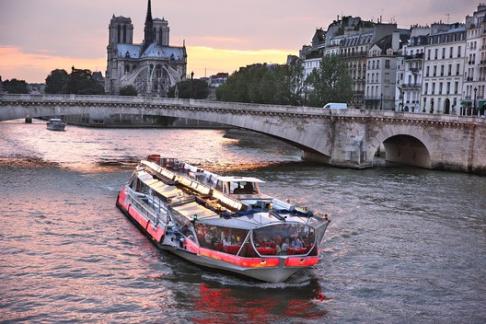
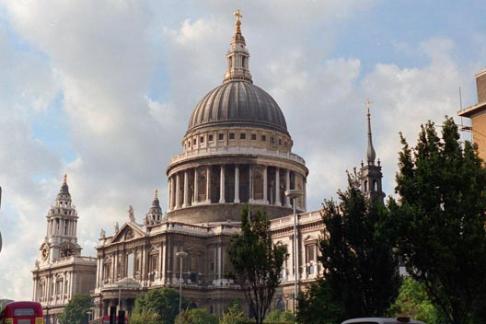
The View From The Shard The Shard is an iconic, landmark building on the London skyline, designed by Master Architect Renzo Piano. At a height of 1,016ft (310 m), the tallest building in Western Europe, the Shard redefines London's skyline and will be a dynamic symbol of London, recognisable throughout the world. The View is situated at the top of The Shard, on floors 68, 69 and 72, and almost twice the height of any other viewing platform in London. Prepare to embark on a multi-sensory journey to 244 m (800ft) above of one of the greatest cities on earth. On arrival at Level 00, you will be drawn into the tapestry of London with glimpses of the city laid out before you. Travelling skyward in two high-speed ‘kaleidoscopic' lifts, you'll swiftly reach Level 68 - a cloudscape above the world. Then journey to Level 69 where the view is revealed and London opens out before you. Here, in the sky above London, you'll experience an astonishing 360 degree, 64 km (40 mile) view over the city and beyond where the past, present and future of London will be unfurled beneath you, brought to life in multimedia displays. For the best view in town, ascend to Level 72, at 244 m, the highest public level of The Shard. You'll be exposed to the elements with sounds of the city around you. Looking up, you'll see the shards of glass that form the top of this skyscraper as they disappear upwards into the sky. Click here to view the sunset times in London PLEASE NOTE: Failure to present the voucher at The Shard will result in you being denied entry. Thames River Rover Pass With the River Red Rover ticket you travel in luxury on a fleet of river liners and may hop on or off at any of the piers as often as you like throughout the day. As the River Thames weaves its way through the heart of London there is history around every bend and there is no better way to see and experience the sights and splendour of this great city than from one of City Cruises modern, wheelchair-friendly RiverLiners™. Enjoy unsurpassed views of some of London's most famous landmarks from the vantage point of our open upper decks and spacious lower saloons with panoramic windows. Take advantage of two bars providing light refreshments and snacks . Cruises depart frequently from Westminster Pier, Waterloo (London Eye) Pier, Tower Pier and Greenwich Pier every day of the year except Christmas Day (25th December). Our shortest trips between piers last about 20-30 minutes while the full round trip takes about two-and-a-half leisurely hours.