Gratis
Apoyo
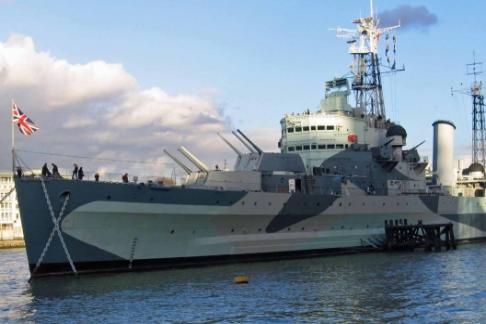
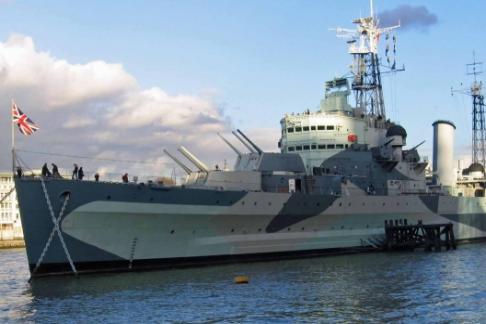
HMS Belfast One of the most powerful large light cruisers ever built, HMS Belfast is now the only surviving vessel of her type to have seen active service during the Second World War. HMS Belfast played a leading part in the destruction of the battle cruiser Scharnhorst, and also the Normandy Landings. In service with the Royal Navy until 1965, she was saved for the nation in 1971 as a unique reminder of Britain’s naval heritage. Launch! Shipbuilding Through the Ages This new family-orientated exhibition will use hands-on and computerised interactive displays and engaging film and footage to demonstrate techniques of shipbuilding, from the ‘age of sail’ to modern prefabrication methods. The exhibition will focus on the science, engineering and social history of shipbuilding in Great Britain, and the interactive elements of the exhibition will allow children of all ages to get involved and experience this history. Explore ‘What shall we give in return for so much?’ One of the most powerful large light cruisers ever built, HMS Belfast is now the only surviving vessel of her type to have seen active service during the Second World War. Serving Britain for 32 years, she played an important role in both the Second World War and the Korean War as well as performing peacekeeping duties throughout the 1950s and 1960s. Saved from destruction in 1971, HMS Belfast is now part of the Imperial War Museum and is the first ship to be preserved for the nation since Nelson’s Victory. Through its team of staff and volunteers – many of whom are veteran crew – the Imperial War Museum is dedicated to making sure that HMS Belfast still has a role to play in reminding visitors of her unique place in Britain’s maritime heritage. History of HMS Belfast The term 'cruiser' goes back to the days of sailing ships when large frigates could be detached from the main fleet to cruise independently. The sailing cruiser, like her twentieth-century counterpart, was sufficiently powerful and fast to attack and destroy enemy commerce raiders. During the nineteenth century when sail gave way to steam and wooden ships were replaced by those built of iron, and later of steel, the cruiser evolved into a powerful warship which was used to patrol the Empire trade routes and protect friendly merchant shipping. After the First World War (1914-1918) a single category of cruiser emerged whose size was indicated by the size of its guns; thus, HMS Belfast is a 6-inch cruiser, designed for the protection of trade, for offensive action, and as a powerful support for amphibious operations. Please note: children under 16 must be accompanied by an adult. Please allow 1½ - 2 hours for your visit. Tower Bridge Exhibition Walkways & Exhibition: Visitors enter Tower Bridge Exhibition via the North Tower. They are then transported by lift to the top of the Tower (47 metres above the Thames) where they have a unique opportunity to see the Bridge’s steel skeleton from within. A short film explains the history and provenance of the Bridge and then there is the chance to admire the spectacular views – from both covered Walkways. On Monday 1st December, Tower Bridge’s East Walkway will reopen with its own GLASS FLOOR, joining the West Walkway to complete our new-look exhibition. Together with far-reaching views of East London, the walkway will be bolstered with a further 20 revered bridges in the extended popular display, ‘Great Bridges of the World’. On the east Walkway there are fantastic views of the Docklands and from the west Walkway you can see the new GLA building, the Tower of London, St Paul’s, the city, the Pool of London and Big Ben and the London Eye in the distance. Interactive computerised kiosks and graphic panels explain the significance of the views to visitors, as well as providing more information on the history and building of the Bridge. The interactive material and graphic panels are written in seven languages and an audio loop for the hard of hearing is also in place for the video show. There is another film to view in the South Tower before descending for the short walk to the historical Engine Rooms, included in your ticket price. Victorian Engine Rooms: These provide a fascinating insight into late 19th century engineering. Installed for the completion of Tower Bridge in 1894, these huge, and beautifully maintained, coal-driven engines were used to power the thousands of bascule Bridge lifts performed until 1976. Although lifts are now operated by electricity, the original steam engines are still in place. The Engine Rooms give visitors a chance to experiment with models demonstrating the technology behind the Bridge. There are also some amazing photographs of Tower BridgeTthroughout its lifetime – including a revealing picture of the heavy steel structure of the Bridge as the stone cladding was installed over it.

One of the most powerful large light cruisers ever built, HMS Belfast is now the only surviving vessel of her type to have seen active service during the Second World War. HMS Belfast played a leading part in the destruction of the battle cruiser Scharnhorst, and also the Normandy Landings. In service with the Royal Navy until 1965, she was saved for the nation in 1971 as a unique reminder of Britain’s naval heritage. Launch! Shipbuilding Through the Ages This new family-orientated exhibition will use hands-on and computerised interactive displays and engaging film and footage to demonstrate techniques of shipbuilding, from the ‘age of sail’ to modern prefabrication methods. The exhibition will focus on the science, engineering and social history of shipbuilding in Great Britain, and the interactive elements of the exhibition will allow children of all ages to get involved and experience this history. Explore ‘What shall we give in return for so much?’ One of the most powerful large light cruisers ever built, HMS Belfast is now the only surviving vessel of her type to have seen active service during the Second World War. Serving Britain for 32 years, she played an important role in both the Second World War and the Korean War as well as performing peacekeeping duties throughout the 1950s and 1960s. Saved from destruction in 1971, HMS Belfast is now part of the Imperial War Museum and is the first ship to be preserved for the nation since Nelson’s Victory. Through its team of staff and volunteers – many of whom are veteran crew – the Imperial War Museum is dedicated to making sure that HMS Belfast still has a role to play in reminding visitors of her unique place in Britain’s maritime heritage. History of HMS Belfast The term 'cruiser' goes back to the days of sailing ships when large frigates could be detached from the main fleet to cruise independently. The sailing cruiser, like her twentieth-century counterpart, was sufficiently powerful and fast to attack and destroy enemy commerce raiders. During the nineteenth century when sail gave way to steam and wooden ships were replaced by those built of iron, and later of steel, the cruiser evolved into a powerful warship which was used to patrol the Empire trade routes and protect friendly merchant shipping. After the First World War (1914-1918) a single category of cruiser emerged whose size was indicated by the size of its guns; thus, HMS Belfast is a 6-inch cruiser, designed for the protection of trade, for offensive action, and as a powerful support for amphibious operations. Please note: children under 16 must be accompanied by an adult. Please allow 1½ - 2 hours for your visit.
From your starting point by Edinburgh Castle, you head out of the city to the charming village of Roslin, making your first stop at one of Scotland’s most extraordinary buildings - Rosslyn Chapel*. The Chapel’s worldwide fame increased thanks to Dan Brown’s bestselling novel ‘The Da Vinci Code’. Described as the “Library in Stone”, the inside walls of Rosslyn Chapel are adorned with thousands of ancient carvings, each with a story of its own. You can also learn of the myths and legends surrounding the chapel, including tales of the Knights Templar. Leaving Rosslyn you will continue into the heart of the Scottish Borders, an area rich in hills, valleys, rivers and moorland, as well as being the traditional home to Scottish rugby. Next travel to the historic town of Melrose, birthplace of the game of Rugby Sevens and location of Melrose Abbey, founded in 660 AD, and said to be the burial place of the casket containing the heart of Robert the Bruce. Here you stop for lunch and have free time to explore Melrose and its Abbey*. On your return journey, you will travel via the village of St. Boswells and pause for a photo stop at Scott’s View, where you can enjoy glorious scenic views overlooking the valley of the River Tweed, reputed to be one of the favourite beauty spots of the famous Scottish author, Sir Walter Scott. The journey north takes you to Pencaitland, where you will visit the charming Glenkinchie Distillery*, one of the few Lowland whisky distilleries in Scotland. Here you can enjoy “a tour and a taste”, learn more about “the water of life” and sample some of Glenkinchie’s finest malts. You will then return to Edinburgh. *OPTIONAL EXTRA. Mon, Thu & Sat | ALL YEAR Departs: 09:30 Returns: 17:15
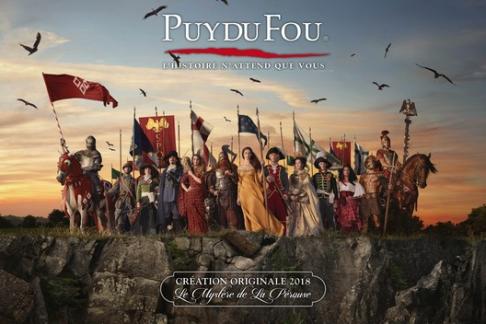
Grand Parc : Go back in time and making the most of many amazing shows and activities around this massive parc that will take your breath away! So enjoy the fresh air in the tree-lined alleys and spend some time strolling from one adventure to another, without any queues! Le Signe du Triomphe After the highly-charged atmosphere of the Gallo-Roman Stadium, relax with a spell in the Middle Ages. In the Medieval City, admire the expertise of the master craftsmen before setting off on an adventure with ‘The Knights of the Round Table’. Les Vikings After witnessing the assault by the Viking longboats and being serenaded by the Traditional Musicians, take time out to visit the Fort of the Year Thousand and travel through time in the Puy du Fou Odyssey. Le Secret de la Lance Leave the Hundred Years War behind and go through the moat to discover a wide range of activities for the whole family and the Grand Parc’s new show «The Lovers of Verdun». Mousquetaire de Richelieu By the Grand Carrousel, the wonderful French gardens lead you to the Imaginary World of La Fontaine. Then experience the Belle Epoque atmosphere of the Market Town in 1900. Le Bal des Oiseaux Fantômes Deep in the ancient forest, Puy du Fou’s natural surroundings become part of a unique show. From the birds of prey aviaries to Flower Valley, enjoy wandering through a world in which nature reasserts itself. Les Orgues de Feu The Puy du Fou is also the kingdom of children. They are fascinated by the shows and have fun in the Grand Parc’s games and entertainment, before the magic of the Organs of Fire.
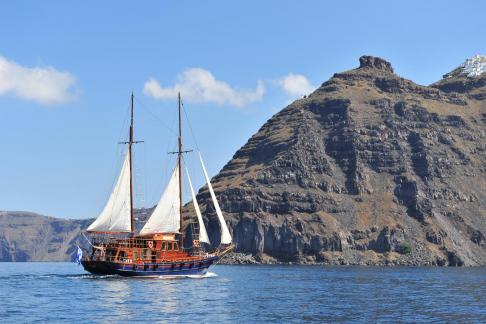
Lugar de salida: El antiguo puerto de Fira. Solo se puede acceder al puerto en: En teleférico: es perfectamente seguro, consta de 6 vagones y tiene capacidad para 6 personas por vagón. Durante la temporada alta (abril-octubre) sale cada 20 minutos. Las entradas individuales cuestan 5 € para adultos y 2,50 € para niños. A pie: tendrá que caminar por los famosos 600 escalones de la carretera tradicional que conecta el puerto viejo con la ciudad de Fira. El descenso demora entre 20 y 30 minutos, dependiendo de su condición física. En burro: los burros solían ser el medio de transporte tradicional de la isla. Suben y bajan con frecuencia al antiguo puerto de Fira. Un solo viaje cuesta alrededor de 5 € por persona y dura unos 20 minutos. La mayoría de la gente prefiere subir al burro.
MENU DÉGUSTATION
TRIO D'ENTRÉES
ASSORTIMENT DE 4 PLATS
ASSIETTE GOURMANDE
- Gaspacho de tomates
- Feuilleté de chèvre chaud au miel
- Rolls de légumes BIO
- Sushi de luxe
- Merlan pané façon Fish&Chips
- Brochette de poulet caramélisé
- Hachis parmentier reconstitué
- Tarte au chocolat
- Salade de fruits
- Crème brulée