Gratis
Apoyo


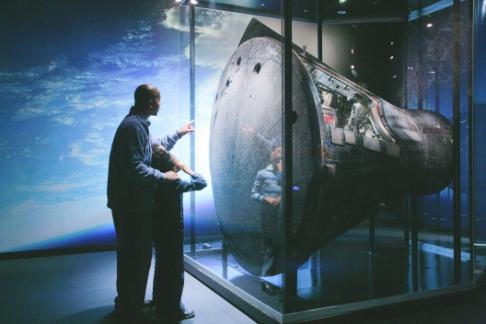
SKYDECK CHICAGO At 1,353 feet and 110 stories above the streets of downtown Chicago, The Ledge at the Willis Tower (formerly known as Sears Tower) Skydeck will transform any visitor's--or local's for that matter--experience with the Windy City. In January 2009, Willis Tower owners began a major renovation of the beloved Skydeck, which originally opened in 1974, and served as a premier tourist attraction throughout the skyscraper's tenure as the Sears Tower. When ownership changed hands, the fresh blood added a fresh look--and adrenaline rush--to the 103rd floor in the form of retractable glass balconies extending about 4 feet over Wacker Drive and the Chicago River below. Still the 8th tallest building in the world, and the absolute tallest in the Western Hemisphere, Willis Tower's Skydeck draws 1.5 million people a year who are eager to ascend the 110-story, 1,454 foot (443 meter) building for awesome panoramic views of the city and surrounding countryside. Your journey to the top of the Willis Tower starts with a walk through an airport-style metal detector, followed by a slow elevator ride down to the waiting area where visitors queue for tickets. A sign will tell you how long you'll have to wait to get up high; this is a good time to confirm the visibility. Even days that seem sunny can have upper-level haze that limits the view. On good days, however, you can see for 40 to 50 miles (64 to 80 kilometers), as far as the states of Indiana, Michigan. Iowa, and Wisconsin. While you wait, you can watch a film about Willis Tower factoids. Then you'll wait a little longer before the ear-popping, 70 second elevator ride up to the 103rd floor deck. From here, the entire city stretches below, and you can see exactly how Chicago is laid out. Willis Tower, Skydeck, and The Ledge Fast Facts The hundreds of forehead prints visitors left behind each week on Skydeck windows served as this inspiration for The Ledge. The Ledge boxes can each bear about 4-1/2 metric tons of weight, and adventurers who trust that statistic enough to prove it can often be found jumping and bounding around the entirely translucent enclosures as Chicago's heavy traffic and infrastructure bustle below. The Ledge’s glass panels weight 1,500 pounds apiece, and each box is comprised of three layers of half-inch thick glass laminated into one seamless unit. In addition to serving 1.3 million tourists per year in its 4.5+ million square feet of space, Willis Tower is home to more than 100 companies, including prominent law, insurance, transportation, and financial services. The Ledge's glass boxes retract into the Skydeck main floor for easy maintenance, probably mostly cleaning off the 974 dead birds that must fly into them every month. The Moonwalk is the most popular dance performed on The Ledge, followed closely by the Running Man. Riverdance clocks in at a distant third. Bringing people who are afraid of heights to The Ledge is not recommended, unless you are mean-spirited or really don't like them. In which case, you should probably just take them here. Willis Tower was known as Sears Tower for decades, until the 30th anniversary of Diff'rent Strokes, at which point it was rightfully renamed. ADLER PLANETARIUM Adler Planetarium Featured Shows: Planet Nine - In July 2015, the New Horizons spacecraft gave us our first close look at Pluto, the most famous dwarf planet in the outskirts of our Solar System. The New Horizons flyby was big news, and the pictures it continues to send back to Earth reveal a world far more complex than anyone realized. Destination Solar System - WHAT YOU WILL DISCOVER The year is 2096. Space tourism is booming, and you’ve signed up for a quick trip around the Solar System with Space Express Tours! In this live show, your guides are Jesse, a lovable rookie tour guide who can’t wait to show you the wonders of your celestial neighborhood, and Max, the much more experienced—if slightly grumpy—shipboard computer. With Max steering the ship and Jesse chattering excitedly about each place you visit, you’ll soar through the Asteroid Belt, explore the moons of Jupiter and Saturn, and hover over the roiling surface of the Sun. Hold on tight! Cosmic Wonder - WHAT YOU WILL DISCOVER Ever since the first curious person looked up at the night sky, people all over the world have challenged themselves to uncover its secrets. What are stars? How did they get there? Why does our view of the sky change throughout the year? What holds the Universe together? Skywatch Live - WHAT YOU WILL DISCOVER The Adler’s view of downtown Chicago is magnificent, but the lights of the city make it a little tough to see the ones in the sky. What’s a stargazer to do? Join us for Skywatch Live! In this show, your live presenter will turn down the city lights and crank up the stars to show you the night sky over Chicago like you’ve never seen it before. You’ll learn how to navigate by starlight, get to know the stars behind your favorite constellations, and witness the incomprehensible vastness of the Universe without ever leaving your seat. Earth, Moon & Sun - WHAT YOU WILL LEARN With the help of Coyote, an amusing character adapted from Native American oral traditions, kids will laugh and learn as they explore the relationship between the Earth, Moon, and Sun. Coyote has lots of misconceptions about our world, the universe, and well… just about everything. Coyote’s humorous mistaken ideas about the universe help the audience understand how the Earth, Moon, and Sun work together as a great big system. Undiscovered Worlds - WHAT YOU WILL DISCOVER Until very recently, the only planets known to us were the familiar worlds in orbit around our Sun. In the last two decades we have confirmed more than 1500 new planets, called exoplanets, orbiting other stars; thousands more are awaiting study. Undiscovered Worlds tells the tale surrounding this explosion of discovery and examines what will be required to determine which, if any, of these new exoplanets can support life. Welcome to the Universe - WHAT YOU WILL DISCOVER In Welcome to the Universe, you’ll get a clear picture of your place in this jaw-dropping cosmic landscape. With the guidance of a live presenter, you’ll explore the Pleiades star cluster, sail past the Andromeda galaxy, navigate the galaxies of the Coma Cluster, and discover hidden wonders of the Universe. One World, One Sky: Big Bird's Adventure - WHAT YOU WILL DISCOVER Join Big Bird and Elmo on an unforgettable journey to the Moon and back! When Elmo’s friend Hu Hu Zhu stops by Sesame Street for a visit, he notices that Sesame Street is a little bit different from his home in China. But when he looks up at the sky, he feels right at home. Elmo and Hu Hu Zhu may live in different cities, but they share the same sky! Featured Exhibits: (Temporary) - What is a Planet? - What You’ll See And Do: Witness how astronomers and the media reacted to Pluto’s reclassification in 2006. Learn what the current definition of a planet is and hear what Adler Astronomers think of the current definition. Voice your opinion about Pluto alongside skeptics and space enthusiasts through an interactive voting poll in real time. Explore artifacts from the Adler collections that illustrate the ever-evolving definition of a planet. This temporary exhibition, which is included with general admission, will be open to the public from March 19, 2016 through January 8, 2017. Mission Moon - WHAT YOU WILL DISCOVER Mission Moon invites you to experience America’s first steps into space through the eyes of NASA’s Captain James A. Lovell Jr. and his family. You’ll find out how the United States became the first nation to put a man on the Moon, what it’s really like to be an astronaut, and why it takes a team to explore uncharted worlds. Community Design Lab - In the Community Design Lab (CDL), you can test different materials to find out which ones will survive the journey to 100,000 feet above the Earth’s surface. Your discoveries may find their way into a future flight with Far Horizons, the Adler’s high-altitude ballooning program! If you could photograph an object in space, what would it be, and who would you share it with? In the CDL, you can build a DIY telescope-mount for your smartphone and become an instant astrophotographer! Test it out on one of our ’scopes and share your photos on social media. Our Solar System - WHAT YOU WILL DISCOVER Our Solar System is much more than a star and eight planets; it is home to a set of diverse and amazing objects that we are only beginning to understand. Pilot your own adventure in Our Solar System and explore the variety of objects currently orbiting our Sun. The Universe - A Walk Through Space & Time - WHAT YOU WILL DISCOVER Transport yourself to the distant corners of the cosmos and witness how the Universe evolved over 13.7 billion years, from the Big Bang to this morning’s sunrise. Follow the Universe from its meager beginnings and see how galaxies, stars, planets—and all the atoms in your body—were created as the Universe grew. Explore regions farther than our Solar System, billions of light-years from home. Zoom from one wondrous location in the Universe to another and investigate the most diverse and beautiful objects in deep space in ultra high resolution from the world’s most advanced telescopes. Planet Explorers - WHAT YOU WILL DISCOVER Are you interested in going to space and exploring other planets? Prepare for your out-of-this-world adventure in Planet Explorers. Begin by exploring your home, your backyard, and the sky above. What you discover will prepare you for your mission to space and the mysterious Planet X. Telescopes: Through the Looking Glass - WHAT YOU WILL DISCOVER Astronomers have studied the cosmos for thousands of years, but until about 400 years ago, they did it without telescopes! In Telescopes: Through the Looking Glass, you’ll find extraordinary beauty and technology in some of the world’s most important telescopes and learn how these clever light-catching devices helped us discover our Universe. Clark Family Gallery WHAT YOU WILL DISCOVER This futuristic, constantly changing environment features a one-of-a-kind architecture with vibrant lighting and video presentations. It was created using approximately 13,000 linear feet of aluminum tubing and 20,000 square yards of fabric. The gallery also has 125 LED lights, each capable of producing sixteen million different colors and over two billion different lighting combinations. Astronomy in Culture - WHAT YOU WILL DISCOVER Go back in time and learn about some of the people and societies who have challenged themselves to understand our place in the Universe. This exhibition features spectacular astrolabes, armillary spheres, and sundials to illustrate the medieval European and Middle Eastern conception of the Universe. Visit our medieval classroom to find out how much different school was back then. Learn how to use early astronomy tools including astrolabes and sundials. Atwood Sphere - WHAT YOU WILL DISCOVER Experience the night sky over Chicago as it appeared in 1913 in the Atwood Sphere – Chicago’s oldest planetarium. Although the star positions have not changed since then, we can see only a small percentage of these stars in our current night sky due to light pollution. The sphere is seventeen feet in diameter and has 692 holes drilled through its metal surface. These holes allow light to enter and show the positions of the brightest stars in the night sky. Take a live guided tour of the Atwood Sphere and identify stars and the constellations they form.
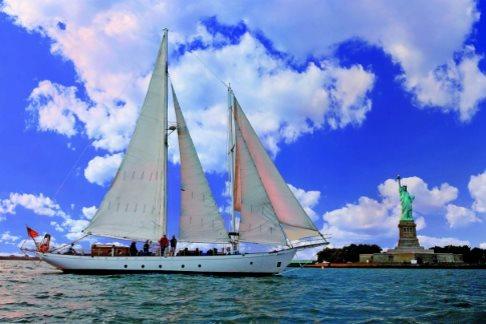
Shearwater is a classic Newport-style schooner yacht, only recently recognized as a national landmark in 2009. The vessel was built by Rice Brother Corporation in East Boothbay, Maine, back in a time when yachting was a rare combination of elegance and adventure; Rice Bros. were well known for building luxury pleasure yachts and produced some 4,000 hulls over a period of 64 years. The keel was laid down on January 4, 1929 and a news clip from the Boothbay Register reflects alongside a photograph "Tyler Hodgon at the old Tide Mill is getting out timbers for the schooner to be built at Rice’s. Vessel to be built of native white oak." Traditionally built from hand-hewn native white oak, she was the last boat to be constructed at that yard - likely due to the ensuing Great Depression brought on by the Stock Market Crash that occurred later that autumn. East Boothbay was a small coastal town with shipbuilding being its only industry. About 40 workmen were employed for the construction of SHEARWATER. Her designer Theodore Donald Wells was born in Hudson Falls, N Y on October 22, 1875. He was a naval architect and marine engineer, a member of the Society of Naval Architects and Marine Engineers and also the Institute of Naval Architects London. His education included post-graduate work at the University of Glasgow in Scotland. He began his career as a member of the firm Herreshoff and Wells, N. Y. City in 1902. Working with Herreshoff no doubt had an influence on his designs, which bear similarities to many of the famous Herreshoff designed yachts of that time. From 1903 to 1907 he worked for Wintringham and Wells and then began practicing his profession under his own name. Mr. Wells joined the Navy Department in March 1917 and became Superintending Constructor of the Baltimore District U. S. N. Notable yachts designed and constructed under his supervision are "Viking" a 272 foot steel motor yacht built for George F. Baker in 1929 by Newport News and "Karina" a three masted schooner built for Robert E. Tod in 1932 by Staten Island Shipbuilding. Mr. Tod was a well-known offshore yachtsman as was his former yacht ‘Thistle", which competed in the Emperors Cup ocean race. SHEARWATER was launched on May 4, 1929 and photographs in the Boothbay Register reflect her graceful and elegant lines. Her first Captain, Leon Esterbrook of Edgarton, MA, arrived to take charge of the fitting out. Her owner Charles E Dunlap was a member of the Seawanhaka Corinthian Yacht Club, Oyster Bay, NY and this became SHEARWATER’s first homeport after her completion in late September 1929. It was there in Oyster Bay that she first started to thrill those who sailed in luxury aboard her and those who were privileged to crew her on race day. Since her launching and documentation in Lloyd’s Register of American Yachts in 1929, she has had a colorful history and has been carefully maintained and restored to standards that few contemporary vessels are able to match and is truly a piece of American Maritime History. On November 7, 1942 SHEARWATER was requisitioned by the War Shipping Administration and became a member of The United States Coast Guard’s Coastal Picket Patrol during World War Two. She was painted gray and bore the numbers CG67004. Based at Little Creek, Virginia she patrolled the waters east of the Chesapeake Bay entrance and south towards Cape Hatteras. Her skipper during that period reflected on how they used their free time while out on submarine patrol to race against other yachts and in his own words "sailed in tandem with the schooner Lord Jim, racing in and out of port, up and down the east coast and winning." She was designed and built as a gaff rigged schooner but during this period was changed to a Marconi rig. She carries over 2,550 square feet while under full sail. A true veteran world cruiser, she first transited the Panama Canal in July 1946 and in the late 1970’s and early 1980’s completed a two and a half-year global circumnavigation. In December 1971 Mrs. John B. Thayer of Rosemont, wife of a former trustee and treasurer, donated SHEARWATER to the University of Pennsylvania’s Institute of Environmental Medicine. She was used by the university as a laboratory for research on physiological responses to the stresses of living and working underwater. Captained by James Shearson, she was fitted with compressors, generators, monitoring instruments and a small decompression chamber. She has participated in many Ancient Mariner and Classic yacht races in U S waters as well as racing in the Bay of Islands in New Zealand while on her circumnavigation in the early 1980’s. It is rumored she was once dismasted in the famous Newport to Bermuda race. She was last raced by the current owners in San Diego in May 1995 in the American Schooner Cup and finished second overall. She entered the yacht charter industry in 1966 whilst on the West Coast sailing to the Channel Islands and was again used to generate income to keep her shipshape while owned by the University of Pennsylvania. During the chartering industry’s infancy in the Caribbean, SHEARWATER was known as the " Queen of the Fleet". Today she continues this tradition offering the most unique sailing experience and has passed rigid Coast Guard inspections and can carry up to 49 passengers. We welcome you to join us for an excellent opportunity to experience the ambiance of a vintage sailing vessel while delighting in the splendors of The Manhattan sky-line, the Statue of Liberty or the beauty of the oceans beyond.
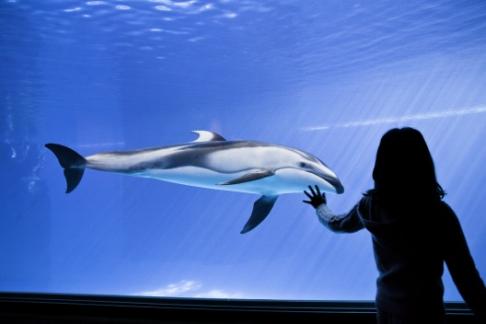
SKYDECK CHICAGO At 1,353 feet and 110 stories above the streets of downtown Chicago, The Ledge at the Willis Tower (formerly known as Sears Tower) Skydeck will transform any visitor's--or local's for that matter--experience with the Windy City. In January 2009, Willis Tower owners began a major renovation of the beloved Skydeck, which originally opened in 1974, and served as a premier tourist attraction throughout the skyscraper's tenure as the Sears Tower. When ownership changed hands, the fresh blood added a fresh look--and adrenaline rush--to the 103rd floor in the form of retractable glass balconies extending about 4 feet over Wacker Drive and the Chicago River below. Still the 8th tallest building in the world, and the absolute tallest in the Western Hemisphere, Willis Tower's Skydeck draws 1.5 million people a year who are eager to ascend the 110-story, 1,454 foot (443 meter) building for awesome panoramic views of the city and surrounding countryside. Your journey to the top of the Willis Tower starts with a walk through an airport-style metal detector, followed by a slow elevator ride down to the waiting area where visitors queue for tickets. A sign will tell you how long you'll have to wait to get up high; this is a good time to confirm the visibility. Even days that seem sunny can have upper-level haze that limits the view. On good days, however, you can see for 40 to 50 miles (64 to 80 kilometers), as far as the states of Indiana, Michigan. Iowa, and Wisconsin. While you wait, you can watch a film about Willis Tower factoids. Then you'll wait a little longer before the ear-popping, 70 second elevator ride up to the 103rd floor deck. From here, the entire city stretches below, and you can see exactly how Chicago is laid out. Willis Tower, Skydeck, and The Ledge Fast Facts The hundreds of forehead prints visitors left behind each week on Skydeck windows served as this inspiration for The Ledge. The Ledge boxes can each bear about 4-1/2 metric tons of weight, and adventurers who trust that statistic enough to prove it can often be found jumping and bounding around the entirely translucent enclosures as Chicago's heavy traffic and infrastructure bustle below. The Ledge’s glass panels weight 1,500 pounds apiece, and each box is comprised of three layers of half-inch thick glass laminated into one seamless unit. In addition to serving 1.3 million tourists per year in its 4.5+ million square feet of space, Willis Tower is home to more than 100 companies, including prominent law, insurance, transportation, and financial services. The Ledge's glass boxes retract into the Skydeck main floor for easy maintenance, probably mostly cleaning off the 974 dead birds that must fly into them every month. The Moonwalk is the most popular dance performed on The Ledge, followed closely by the Running Man. Riverdance clocks in at a distant third. Bringing people who are afraid of heights to The Ledge is not recommended, unless you are mean-spirited or really don't like them. In which case, you should probably just take them here. Willis Tower was known as Sears Tower for decades, until the 30th anniversary of Diff'rent Strokes, at which point it was rightfully renamed SHEDD AQUARIUM EXHIBITS AMPHIBIANS! Get ready for a toadally ribbiting experience! Shedd’s new special exhibit, Amphibians, hops into the aquarium May 16 and is included with admission. In Amphibians, you’ll meet 40 species of frogs, salamanders and rarely seen caecilians. Learn how amphibians’ lives are full of change, from their life cycles to their adaptations to live in nearly every environment on Earth. Find out how too much change can spell trouble for amphibians — and how you can help them cope with big changes in our world today! Waters of the World Travel the world in 80 habitats. Dive into Oceans, from coastal kelp forests to the seafloor. Explore the self-contained ecosystems of Islands and Lakes. Visit Rivers—big and small—and learn more about our local waters in the new At Home on the Great Lakes exhibit. Meet hundreds of amazing animals, from tiny mantella frogsto a a giant octopus, from a Grand Cayman blue iguana to Nile knifefish, and from moon jellies to sea stars. We even have map turtles, in case you get lost. Caribbean Reef Take a 360-degree tour of an underwater reef community. Follow a green sea turtle. Peek at a moray eel in a rocky crevice. Watch regal rays glide by. Get eye-to-eye with parrot fish and sharks. Visit Caribbean Reef, Shedd’s award-winning 90,000-gallon circular habitat in the grand rotunda. Amazon Rising Take an exotic journey in the Amazon, home to one-third of all living things. Watch out for anacondas and piranhas, spiders, rays and a camouflaged caiman. In churning river channels, still lakes and even flooded treetops look for tetras, turtles and fruit-eating fish called tambaqui. See how the region’s animals, plants and people adapt to the water’s dramatic annual rise and fall. Abbott Oceanarium The Abbott Oceanarium immerses you in the vibrant coastal ecosystem of beluga whales, Pacific white-sided dolphins, sea otters and sea lions. You’ll also find a host of fishes and invertebrates that make their homes where freshwater flows into the ocean or where tides turn seascapes to landscapes and back again each day. Use our self-guided map to discover how animals are linked to each other, their homes and you. Polar Play Zone Kids have a place at Shedd that they can call their own—Polar Play Zone. It’s cool as ice and twice as nice! The penguins think so, too. Play! Splash! Pretend! What would you like to be? A sleek sliding penguin? A deep-sea explorer? How about both? In Polar Play Zone, you can slip into a penguin suit and try being a bird in the Icy South play area. From there, head to the Icy North to explore the belugas’ Arctic waters in a kid-sized submarine. Don’t forget to shake hands—or is it arms?—with colorful sea stars in the touch pools. In Polar Play Zone, you’ll learn about polar opposites—big and small, fast and slow, shallow and deep, even north and south—while you play. The Oceanarium Aquatic Presentation is included however based on available seating and remaining show times at the time of guest arrival. (2018 Aquatic Presentation Schedule) Stingray Touch (seasonal experience) is included. Open late May through October. 4D Experience is not included however the 4D experience tickets may be purchased at the theatre for $3.00 per -person
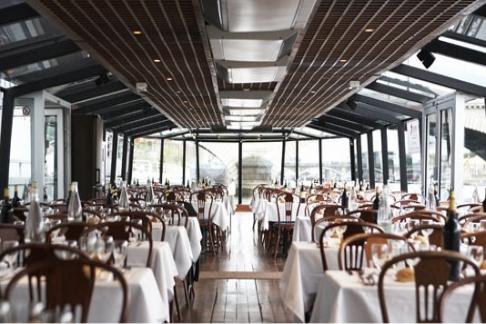
Menu "Decouverte"* Starters Assortment: Fried scallops, artichoke cream, lemon crumble Salt and pepper butterfly prawns, candied vegetables with cumin Duck foie gras, lightly tangy apple éclair Verrine of lentils and crispy vegetables with raw and cooked tomatoes ** Main course at choice: Chicken supreme, creamy risotto with green asparagus, thyme sauce Hake pie with lemon cream, crushed potatoes with seaweed Slab of beef, potato patty, oyster mushrooms and yellow carrots (+) ** Desserts Assortment: Chocolate cream, caramelised biscuit crunch and fresh banana Salted butter caramel macaroon and seasonal fruit Mini shortbread with orange meringue cream Verrine of chestnut cream and vanilla mousse with hazelnut flakes ** Vegetarian Menu: Pumpkin soup, baby salad greens with pine nuts and marinated artichokes ** Fried seasonal vegetables, risotto with green asparagus, oyster mushrooms ** Coconut rice pudding, seasonal fruits, black and white chocolate mikado Child Menu:

Shared limousine transportation. Collection time confirmed at least 24 hours in advance.
Yogurts and Toppings: Strawberry yogurt, blueberry yogurt, plain yo-gurt, strawberries, strawberry soup.
Bagel Station with Assorted Spreads.
Assorted sliced breads, croissants, English muffins, bagels, pecan sticky bun, strawberry and apple turnovers, cheese danish, apple, granola and blueberry muffins, cream cheese, strawberry jam and grape jelly
Cold Buffet: Flavored yogurts, fresh fruits, cottage cheese, assortment of cereals, house-made granola.
Breakfast Favorites: Scrambled eggs, egg whites scrambled, lobster eggs benedict, Mickey waffles, pancakes, Smoked Salmon, hash brown casserole, bacon, sausage, oatmeal, grits, French Toast.
Breakfast consists of a breakfast buffet at the wonderful Contemporary Resort;
Clients may return to their original hotel or be returned to Universal Orlando or Sea World. Walt Disney Transportation may be used from the Contemporary Resort to reach Walt Disney World.
Our limousine excursions offer the convenience of door to door service. As all limousine excursions use SHARED limousine transportation this requires us to wait until the day prior to the excursion to formulate the most efficient route and provide exact collection times. We ask clients to contact us no later than 72 hours prior to their excursion date to verify we have their correct accommodation details (full address including zip code, contact number, gate code etc.). We will then contact them at least the day prior to provide exact collection time. In order to operate these limousine excursions efficiently we reserve the right to ask a client to make their way to a centralized pickup in the event their accommodation exceeds an acceptable distance from the standard Orlando tourism area. Limousine may be either stretch limousine or top of the line Mercedes Sprinter Limo.

Don't forget your camera, as the tour has many oppurtunities for photos! The tour begins at the West end of Fisherman’s Wharf. Smell the Italian food cooking in North Beach, San Francisco’s Little Italy Stop at Washington Square Park, Learn about the Beat Generation and cruise by Beach Blanket Babylon, the oldest running musical review in the world Feel like you’ve left San Francisco as you explore the hidden alleys of Chinatown a veritable city within a city Learn about the historic Barbary Coast neighborhood Enjoy romantic night views of the Bay Lights show, new Salesforce Tower light show, Ferry Building and Treasure Island The tour will loop from the base of Transamerica Pyramid towards the Wharf, cruising past historic Piers along the Embarcadero Ride through the Historic Fisherman’s Wharf Neighborhood and see the behind the scenes operations of the fishing industry Check out the Cable Car Turnaround at the end of the Hyde Street Line See the Dungeness Crab Stands in Historic Fisherman's Wharf Pause to take in breathtaking nighttime views of the Alcatraz Lighthouse Rider Requirements: Ages 12 and up over 100 lbs (45kg) and under 250 lbs.(113 kg) are welcome. No pregnant guests. Not recommended for some guests over age 70 or with mobility, motor control or recent surgeries. Under 18 must go on tour with parents or guardian. All tours start on time, so please arrive 15 minutes early to check in. For the safety and complete training of our guest late arrivals will not be allowed to join a tour that has already started training. Please be on time. Enjoy riding an eco-friendly Segway, see more sights than you could cover on foot, and have lots of fun!