Gratis
Apoyo
VR World There are a wide variety of experiences for all types of people. Some will enjoy shooting droids in space and fighting off zombies to racing on a track, while others will enjoy flying on a paraglider or climbing a mountain. Others still will enjoy watching short films or painting in the green room. Some experiences require full body motion while others are seated activities. Each participant gets approximately 5-10 minutes at each experience. At the gate, each participant will sign up using their real name, a screen name, an email, a phone number, and other pieces of information. While not required, if a participant signs up with their own phone number, they will receive a notification when they are at the the front of the queue for their attraction There are offering a wide selection of non-alcoholic drinks, beer, wine and liquor. Our house cocktails will not disappoint. Try the VRWorldian, Simon’s Escape, Caipirinha Assassin or Salty Borzoi to name just a few. No food at this time. There is no food inside the building, but guests are able to leave and re-enter the building during the time of their ticket. Empire State Building The world-famous 86th and 102nd floor Observatories offer unmatched views of New York City and on a clear day one can see to New Jersey, Connecticut, Massachusetts, Pennsylvania and Delaware. 1,050 feet above the city’s bustling streets, the 86th floor Observatory offers panoramic views from within a glass-enclosed pavilion and from the surrounding open-air promenade. 200 feet higher, our 102nd floor Observatory is a private and serene perch in the middle of the greatest city in the world. The Observatories have been a “must visit” for millions each year since it opened to the public in 1931. Each year approximately four million people are whisked to our 86th and 102nd floors, consistently one of New York City’s top tourist attractions. Visit the Observatories 365 days per year, day and night, rain or shine, for magnificent views of Manhattan and beyond. The Empire State Building embodies the feeling and spirit of New York City. It is recognized not only as an iconic landmark offering some of the most spectacular views on earth, but also as an international symbol of shared hopes, dreams, and accomplishment. Accessibility: The Empire State Building is fully ADA compliant. We have handicapped restrooms on the 86th Floor Observatory and also have lowered viewing walls and binoculars. Service dogs are allowed throughout the building. Motorized and non-motorized wheelchairs are permitted. The 86th Floor has ramps to make getting around easier and lowered viewing walls so that visitors in chairs can still take in the view.
Enjoy a rollicking journey through Sin City as comedian Carl LaBove shares his favorite Vegas stories in Stripped with tickets from ShowTickets.com.
Click here for a complete list of current attractions included with the Chicago Explorer Pass Frequently Asked Questions Is this just a discount card? Will I still need to buy tickets? No. Passes include admission to each attraction; no need to pay anything at the gate. Some attractions may offer upgrades or special exhibits for an additional fee. Do I need to choose my attractions in advance? Nope, choose as you go. The pass is good for any combination of the number of attractions you purchased. My child is under 3 years old. Can I get them a Chicago Explorer Pass? Child Passes are recommended for children ages 3-12. Many attractions offer free admission for younger children. Please consult the attraction websites for more details. How will I get my pass? Delivered via E-mail: Printable and Smartphone Versions How do I activate my pass? Easy: simply visit your first attraction! Is the pass valid all day? You bet! Feel free to visit the attractions any time of the day as long as they are open or operating. What is your refund policy? Our Risk Free Guarantee gives you one year from your purchase date to return any non-activated passes for a full refund. How much will I save? Compare the price of the pass to the gate prices of the attractions you want to visit to see how much you can save. Many customers save 40%. We give you the flexibility to create your own itinerary and choose the attractions you want to visit depending on your interests. Can I visit an attraction more than once? No. Your pass includes only one visit per attraction. Does a Chicago Explorer Pass expire? Yes. You have one year from the date of purchase to begin using your pass. After one year, it will expire. After activated, you’ll have 30 days to use your pass. Do I need to make reservations to visit the attractions? Attractions that require a reservation will display a symbol on the guidebook page. Some attractions require a credit card to hold a reservation. In these cases, your credit card will not be charged unless you do not show up for your reservation. What’s the catch? There’s no catch. Chicago Explorer Pass has a partnership with all of the participating attractions to make your visit to Chicago as memorable as possible and to help you save time and money. Can I share my pass with a friend or sell it? No. The Chicago Explorer Pass is non-transferrable and may not be re-sold. What happens if an attraction is closed or a tour is cancelled due to weather or other problem? While we do our best to ensure that all attractions are available, events happen that are out of our control. The great thing about a Chicago Explorer Pass is that there are so many attractions to choose from. If an attraction is closed, or cannot be visited for some reason, we know you'll find a fun alternative in your guidebook! SHEDD AQUARIUM EXHIBITS AMPHIBIANS! Get ready for a toadally ribbiting experience! Shedd’s new special exhibit, Amphibians, included with admission. In Amphibians, you’ll meet 40 species of frogs, salamanders and rarely seen caecilians. Learn how amphibians’ lives are full of change, from their life cycles to their adaptations to live in nearly every environment on Earth. Find out how too much change can spell trouble for amphibians — and how you can help them cope with big changes in our world today! Waters of the World Travel the world in 80 habitats. Dive into Oceans, from coastal kelp forests to the seafloor. Explore the self-contained ecosystems of Islands and Lakes. Visit Rivers—big and small—and learn more about our local waters in the new At Home on the Great Lakes exhibit. Meet hundreds of amazing animals, from tiny mantella frogsto a a giant octopus, from a Grand Cayman blue iguana to Nile knifefish, and from moon jellies to sea stars. We even have map turtles, in case you get lost. Caribbean Reef Take a 360-degree tour of an underwater reef community. Follow a green sea turtle. Peek at a moray eel in a rocky crevice. Watch regal rays glide by. Get eye-to-eye with parrot fish and sharks. Visit Caribbean Reef, Shedd’s award-winning 90,000-gallon circular habitat in the grand rotunda. Amazon Rising Take an exotic journey in the Amazon, home to one-third of all living things. Watch out for anacondas and piranhas, spiders, rays and a camouflaged caiman. In churning river channels, still lakes and even flooded treetops look for tetras, turtles and fruit-eating fish called tambaqui. See how the region’s animals, plants and people adapt to the water’s dramatic annual rise and fall. Abbott Oceanarium The Abbott Oceanarium immerses you in the vibrant coastal ecosystem of beluga whales, Pacific white-sided dolphins, sea otters and sea lions. You’ll also find a host of fishes and invertebrates that make their homes where freshwater flows into the ocean or where tides turn seascapes to landscapes and back again each day. Use our self-guided map to discover how animals are linked to each other, their homes and you. Polar Play Zone Kids have a place at Shedd that they can call their own—Polar Play Zone. It’s cool as ice and twice as nice! The penguins think so, too. Play! Splash! Pretend! What would you like to be? A sleek sliding penguin? A deep-sea explorer? How about both? In Polar Play Zone, you can slip into a penguin suit and try being a bird in the Icy South play area. From there, head to the Icy North to explore the belugas’ Arctic waters in a kid-sized submarine. Don’t forget to shake hands—or is it arms?—with colorful sea stars in the touch pools. In Polar Play Zone, you’ll learn about polar opposites—big and small, fast and slow, shallow and deep, even north and south—while you play. The Oceanarium Aquatic Presentation is included however based on available seating and remaining show times at the time of guest arrival. (2018 Aquatic Presentation Schedule) Stingray Touch (seasonal experience) is included. Open late May through October. 4D Experience is not included however the 4D experience tickets may be purchased at the theatre for $3.00 per -person Pets are not allowed in the aquarium
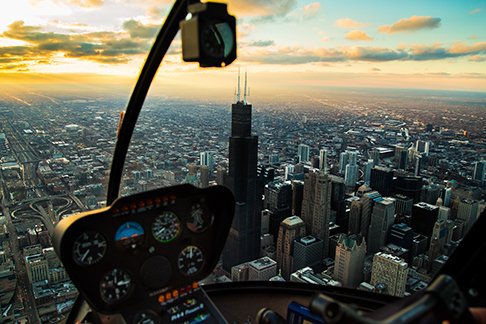
Your entire experience will be approximately 1 hour which includes check-in, safety briefing, and 15 – 17 minute helicopter flight. The customer experience center includes; a Chicago history exhibit, flight simulator, helipad viewing lounge, interactive games, and snacks & refreshments available for purchase. Chicago Helicopter Experience operates a fleet of Airbus AStar helicopters. The aircraft accommodates up to 6 guests plus a pilot per flight and is climate controlled. You will enjoy unobstructed views of the sights with spacious seating and listen to the live tour narration through Bose noise cancelling headsets. All tours depart and return to Chicago Helicopter Experience Downtown Heliport; 2420 South Halsted St. Free Parking on site. Roundtrip shuttle service is available from downtown hotels for an additional charge. Ticket Terms Maximum weight per passenger is 250 lbs (113kg) Children 3 years old and above Check-in time is 30 minutes prior to schedule tour departure time Passengers under the influence of drugs or alcohol will not be permitted to fly – no refund will be given for the cancellation All flight times are approximate and are susceptible to current weather conditions. In the event your flight is cancelled due to inclement weather, your ticket can be rescheduled or refunded for the full amount

Kew Gardens, is a World Heritage Site located in 121 hectares of stunning vistas with six magnificent glasshouses set in a beautiful landscape beside the River Thames between Richmond and KEW in south-west London. Kew Gardens represents more than 250 years of historical gardens. It is home to a remarkable collection of over 30,000 types of plants from all over the world that range from the decorative to the peculiar. Kew Gardens provide opportunities for public enjoyment and enrichment and the behind-the-scenes scientific work helps ensure a sustainable future for plants and people. In the summer of 2004, Kew's determination to make serious botany great fun for children was demonstrated with the opening of 'Climbers and Creepers'. Bringing a new use to an old cycad house by White Peaks, Climbers and Creepers engages children from around 3-9 years in the pleasures of learning more about plants and their relationships with animals and people. Apart from the sheer beauty and tranquillity of the garden's landscapes Kew offers a wonderful day out for all, whether horticulturally, historically or botanically inclined. Botanical Highlights The dates below are approximate, and flowering can vary by three to four weeks, depending on the weather. Spring: Mid-February - early March: A million-and-a-half crocuses below the Temple of Bellona between Victoria Gate and King William's Temple - one of Kew's most spectacular displays (typically late Feb - early March). Camellias between Victoria Gate and the Shirley Sherwood Gallery of Botanic Art. Spring bedding and spring flowers in the open woodland around the Azalea Garden. Daffodils, forsythia and cherry blossom. Orchids, bromeliads and anthuriums in Kew’s Tropical Extravaganza, an annual display of exotic blooms in the Princess of Wales Conservatory. April - May: Lilacs near Kew Palace and White Peaks. Spring bedding in front of the Palm House. Scillas in the Woodland Garden. Flowering cherries, crab apples, magnolias and tulips throughout the gardens. May - June: Bluebells in the Queen's Cottage Grounds. Lilacs, azaleas, rhododendrons and magnolias, Brentford Gate area. The tiny but beautiful alpine flowers in the Davies Alpine House and the Rock Garden. Himalayan blue poppies and rhododendrons in the Woodland Garden. Native plants in long grass areas. Horse chestnut blossom. Summer: June - July: Summer flowers in the walled Duke's Garden and in the Woodland Garden. Giant water lilies growing rapidly in the Princess of Wales Conservatory and the Waterlily House. The Mediterranean Garden near King William's Temple. The Rose Pergola, the Rose Garden and the Order Beds. The Rock Garden. Tulip trees, opposite the Palm House, Philadelphus near the Pagoda. July - September: Themed summer bedding in front of the Palm House. The Order Beds. Giant water lilies flowering in the Princess of Wales Conservatory. Water lilies flowering in the Aquatic Garden and Waterlily House. The herbasceous borders of the Duke's Garden, fascinating medincinal herbs in the Queen's Garden, Grass Garden, Rose Garden. Hibiscus, hydrangeas and Indian bean trees. Autumn: September - October: Autumn crocus in September in the Woodland Glade - Kew's first burst of autumn colour. Belladonna lilies. Trees in autumn colour. October - November: Last of the autumn colours. Grass Garden. Autumn-flowering crocuses, colchicums and hardy cyclamen. Strawberry trees west of King William's Temple and between the Princess of Wales Conservatory and Rock Garden. Winter: November - December: Fruiting trees and shrubs, winter bark. Winter-flowering cherry. January - February: Snowdrops in the Rock Garden and Conservation Area, crocuses along the Princess Walk. Witch hazels by King William's Temple. Cornelian cherry in the winter border in the Duke's Garden. Duchess border along wall outside the Duke's Garden. Camellias between Victoria Gate and the Shirley Sherwood Gallery of Botanic Art. Clematis cirrhosa on the Rock Garden Wall. Rhododendrons in the Rhododendron Dell and, if the winter is mild, the carmine blooms of Magnolia campbellii might appear early. Shrubs in the Winter Border near the Ice House. The Davies Alpine House. Heathers, hellebores, viburnums and cornelian cherry.
Part of this tour will be the visit of the museum of Prostitution for a fascinating introduction to the red light district and what happens there. You will learn everything about the system and experience for yourself what it feels like to sit behind the windows. During this excursion, we guarantee your safety - you will be accompanied by a very reliable guide.