Gratis
Apoyo
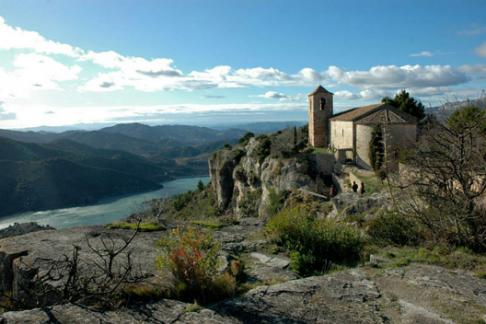
The rocks of Montserrat were formed by natural cement of sand during the centuries. The wind and rain shaped the mountain with strange and varied forms. The popular imagination has seen human or animal shape in some of these peaks, giving those names and inventing legends to explain their fantastic origins. This trip to Montserrat will give you the opportunity to enjoy the wonderful and breath-taking views of the Montserrat Mountain, one of nature’s special creations. You will visit the Royal Basilica of Montserrat, which holds the famous 12th century Romanesque carving of Verge Moreneta (the Black Madonna). You will be able to see this famous statue of the Black Madonna from a distance. The Benedict sanctuary of Montserrat has been founded in 1025 and provides a mystical backdrop for the Virgin of Montserrat, the patron saint of Catalonia who is enshrined in the monastery's Royal Basilica. The little monastery soon began to receive pilgrims and visitors who contributed to the spread of stories of miracles and wonders performed by the Virgin. Today, Montserrat has been modernized to continue attending to the needs to pilgrims, one thousand years after it was originally founded. You will be given some free time to visit the audio visual exhibition about the history and creation of Montserrat. And taste typical liquors of Montserrat. The Escolania of Montserrat is one of the oldest boys choirs in Europe (XIV Century). On some days the children's choir sings in the monastery and so you may be fortunate enough to catch one of their delightful performances. Their timeframe is subjected to the school calendar and special events of the choir and monastery.
Discover this Medieval royal palace that became a revolutionary tribunal and Marie-Antoinette’s prison. The Conciergerie Discover on the Île de la Cité, the exceptional Gothic rooms of the first royal palace of Paris and the reproduction of the prison cells of the revolutionary tribunal. At the end of the 17th century, numerous people were imprisoned in the prison of the Conciergerie, including Marie-Antoinette. The Conciergerie is also listed as a historical building by the Unesco.
The Queen's Gallery was built in the shell of the former Holyrood Free Church and Duchess of Gordon’s School at the entrance to the Palace of Holyroodhouse. The buildings were constructed in the 1840s with funds from the Duchess of Gordon, but fell into disuse in the late 19th century. Benjamin Tindall Architects were appointed project architects for the new Queen’s Gallery in October 1999. Their central visual theme was a celebration of The Queen’s Golden Jubilee, expressed through a series of arches and screens that lead visitors from the Gallery entrance to the exhibition spaces beyond. Their design complements the original 19th-century architecture, elements of which were incorporated into the new spaces. Unsympathetic later internal alterations were removed, and a new exposed steel and concrete floor inserted to reflect the original ‘gallery’ of the Church. A new stone arched entrance was created at the centre of the Horse Wynd frontage, opposite the new Scottish Parliament building. The use of a stone archway, with a courtyard beyond, is a traditional entrance device in Scottish architecture. The main walling is of Catcastle stone, the dressed work and lettering is of Stainton stone and the base is of Kenmay granite. ‘THE QUEEN’S GALLERY’ lettering above the entrance is the work of John Neilson, a calligrapher and carver. The letters were cut from single pieces of stone. Above sits Scotland’s heraldic lion, designed by Jill Watson. The lion sedant is based on a small red lion that sits at the feet of Mary, Queen of Scots on her tomb in Westminster Abbey. (The Palace of Holyroodhouse was once home to Mary, Queen of Scots.) The monumental entrance doors of oak have gilded bronze hinges by Jill Watson. Continuing the heraldic theme, the main hinges are decorated with the Scottish lion and unicorn. The beasts are set against the adjacent urban scene of Edinburgh’s Royal Mile and the rural scene of Arthur’s Seat and Salisbury Crags. The upper hinges are made as golden boughs of flowering native trees – chestnut and laburnum, oak, rowan and hawthorn. The stone archway is decorated with a carved and gilded garland of Scottish flowers, including daisies and thistles, created by Graciela Ainsworth, an Edinburgh-based sculptor, carver and conservator. Over the old entrance to the former church is a stained-glass window by Christian Shaw. The design shows a perspective drawing of the interior of a gallery. At night, the shape of the archway is reflected by the glass lights by Keiko Mukaide set into the paving. The artist has given the tiles a water flow pattern, mirroring the stream of visitors walking in and out of the Gallery. Inside, the reception desk by Hamid van Koten is made from curved pieces of Scottish elm with kilned glass and patinated copper. The pendant lights were designed and made in Edinburgh by Ingrid Phillips. Dividing the reception from the main Gallery area is a patterned glass screen by Jacqueline Poncelet. The screen’s bronze handles by Jill Watson incorporate figures looking at art in a gallery. The dramatic central stair of native timber leads to the Gallery spaces above. The complex shape was designed by the architects with Charles Taylor Woodwork, who were responsible for the construction. Lights set into the first floor illuminate the curved balustrading. The Queen’s Gallery was opened by Her Majesty The Queen on 29 November 2002, as part of the Golden Jubilee celebrations. It hosts a programme of changing exhibitions from the Royal Collection.
One of the most famous buildings in the world, the Tower of London was constructed in the 11th century - almost a 1,000 years ago and has been witness to countless significant events in the development of Britain's now democratic monarchy. During your tour of the Tower of London you will meet the magnificent Yeoman Warders or 'Beefeaters', clad as they were in Tudor times, hear the legend of the ravens and spine chilling tales from the Tower's long history. See the infamous Bloody Tower where the Princes were murdered, Beauchamp Tower where visitors can read carved inscriptions of past prisoners and Traitors Gate where those unlucky enough not to survive imprisonment had their heads impaled - and much more. We sell at less than the gate price, which gives you access to all the Towers and Attractions, as well as the unique Gift Shops, the historic New Armouries Restaurant, Tower Cafe and Kiosk. Your Tower ticket also includes entry to the Crown Jewels. Westminster Abbey Glorious Architecture This magnificent gothic construct is a sight to behold and the incredible stained glass is some of the most impressive in the UK. Coronation Chair Created for King Edward I in 1296, the chair has been the seat for the crowning of every monarch since 1308, including Queen Victoria and our current reigning Queen, HRH Elizabeth II. It is the oldest piece of furniture in the UK that is still used for its original intention. Poets’ Corner The literary corner of the Abbey is named due to the large amount of poets and writers buried there, including Geoffrey Chaucer, Charles Dickens, Rudyard Kipling and Thomas Hardy, as well as many memorial stones and busts dedicated to the likes of Shakespeare and loved Scottish poet Robert Burns. Kings and Queens Westminster Abbey has been the coronation church since 1066 and seventeen monarchs are buried there. The Abbey was also the place where William and Kate tied the knot in 2011.
The Palace is perhaps best known as the home of Mary, Queen of Scots, and as the setting for many of the dramatic episodes in her turbulent reign. Mary was married at Holyroodhouse and witnessed the brutal killing of her secretary Rizzio by her jealous second husband, Lord Darnley, in her private apartments. The Palace briefly served as the headquarters of Bonnie Prince Charlie during the 1745 uprising. Today the State Apartments are used regularly by The Queen and other members of the Royal Family for State ceremonies and official entertaining. What there is to see: The State Apartments reflect the changing tastes of successive monarchs and are renowned for their fine plasterwork ceilings and magnificent furnishings, particularly the unrivalled collection of Brussels tapestries. One of the most famous rooms in the Palace is the Great Gallery, hung with Jacob de Wet's portraits of the real and legendary kings of Scotland. Included on the visit, a display focuses on the Order of the Thistle, the highest honour in Scotland. The Order honours Scottish men and women who have held public office or who have contributed in a particular way to national life. Shown alongside historic insignia is an example of the mantle worn at the Thistle ceremony at St Giles’ Cathedral in Edinburgh, which The Queen attends during her visit to the Palace in July. From 1 April to 31 October the gardens, which are today used for garden parties, can be included as part of a visit to the Palace of Holyroodhouse. Visitors to the gardens must keep to the paths, which are about 400 yards long. The Queen's Gallery at the Palace of Holyroodhouse in Edinburgh hosts a programme of changing exhibitions from the Royal Collection. Book here. Image Credits: 1.Royal Collection Trust / © Her Majesty Queen Elizabeth II 2018 2.Photographer: Peter Smith. Royal Collection Trust / © Her Majesty Queen Elizabeth II 2018
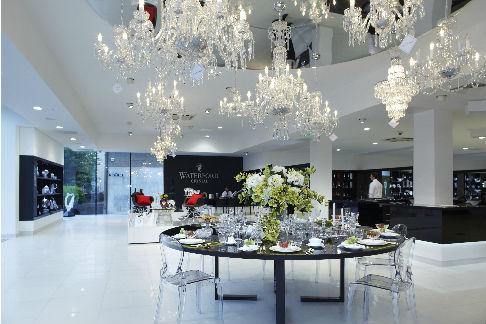
The onsite Crystal Café serves sumptuous food, indulgent homemade sweet treats, decadent fresh coffee and hot chocolate. The Crystal Café is open seven days a week, a daytime cafe, the Crystal Café is all about great food using nothing but the best locally sourced seasonal produce supporting as many Irish suppliers as possible along the way. With delicious breakfast and lunch service every day, the Crystal Cafe is a hugely popular destination. And we have great coffee, tea and pastries just about all day long.